LINDA’S ARTWORLD

A collection of Linda’s artworks, designs, humanitarian projects and publications where light, space, and mathematical precision intersect.

Author: Linda

  • Day 14: Rest Day in Abashiri

    Date
    2022-10-25, Tuesday
    Distance
    20.11 km biked (828.79 km in total)

    Today is supposed to be our first rest day since we started biking in Japan two weeks ago. However, we not only biked still, we even climbed up some of the toughest hills we have encountered on this journey.

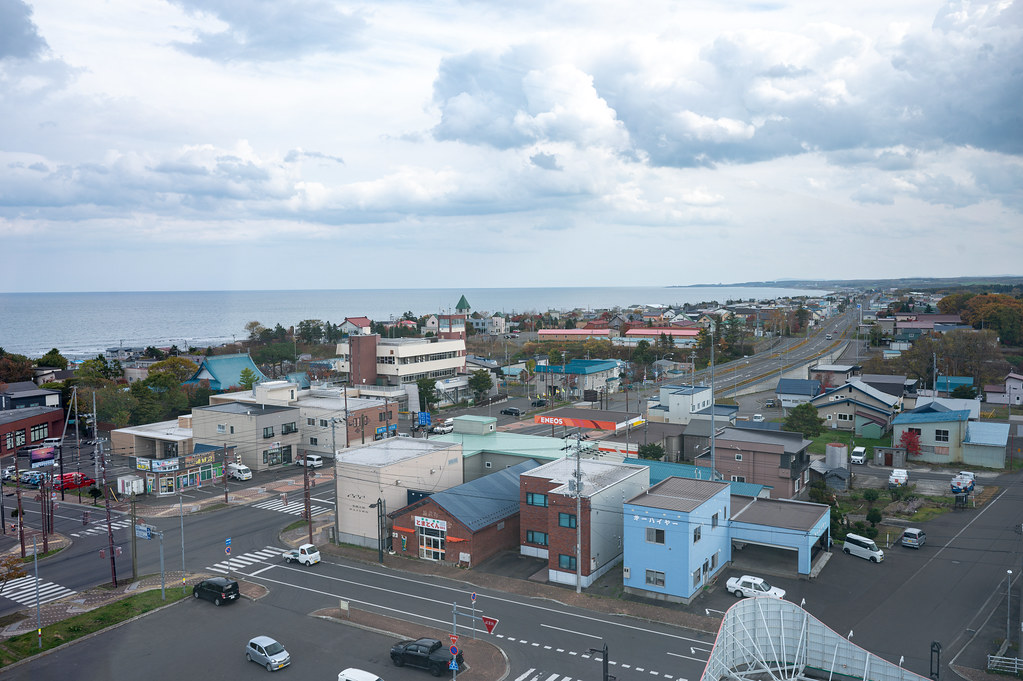
    Abashiri is a harbour city surrounded by countless coastal hills — some of them amongst the steepest I have ever seen in my life. Even without our regular heavy load, we still have much difficulty to conquer them. This makes us rethinking about our plan to bike to Hakone near Mont Fuji where a steep uphill goes on for 8 or 9 km.

    The hotel for which my friend is a member was full so we stayed at another one nearby, called Dormy Inn. We prefer the latter for its offering onsen and breakfast in the Japanese style. The breakfast included is so sumptuous that goes way above my expectation.

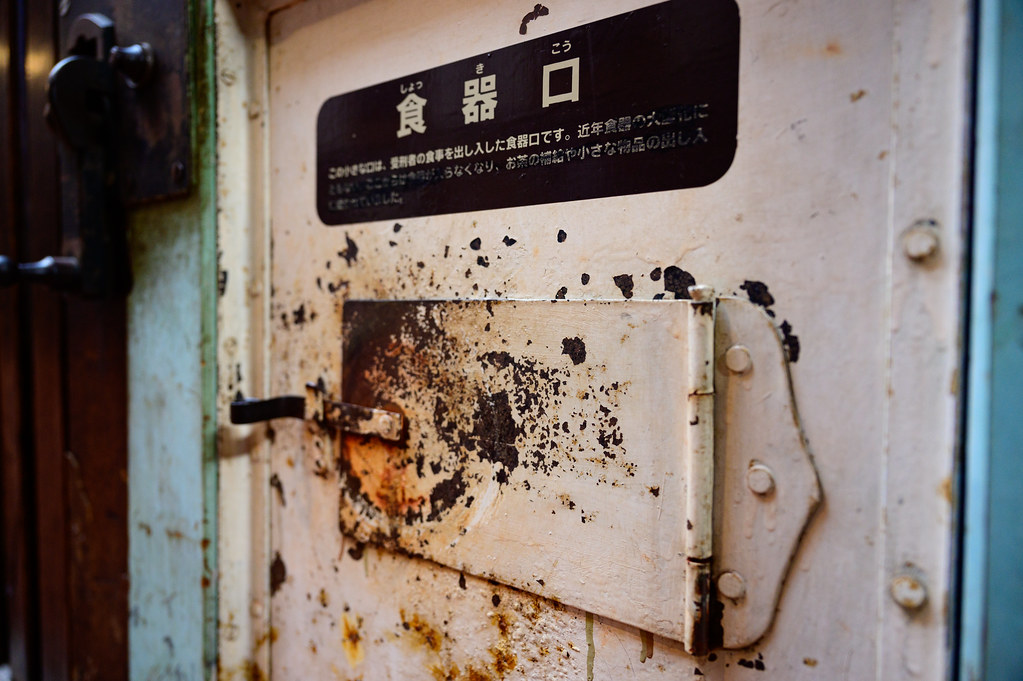
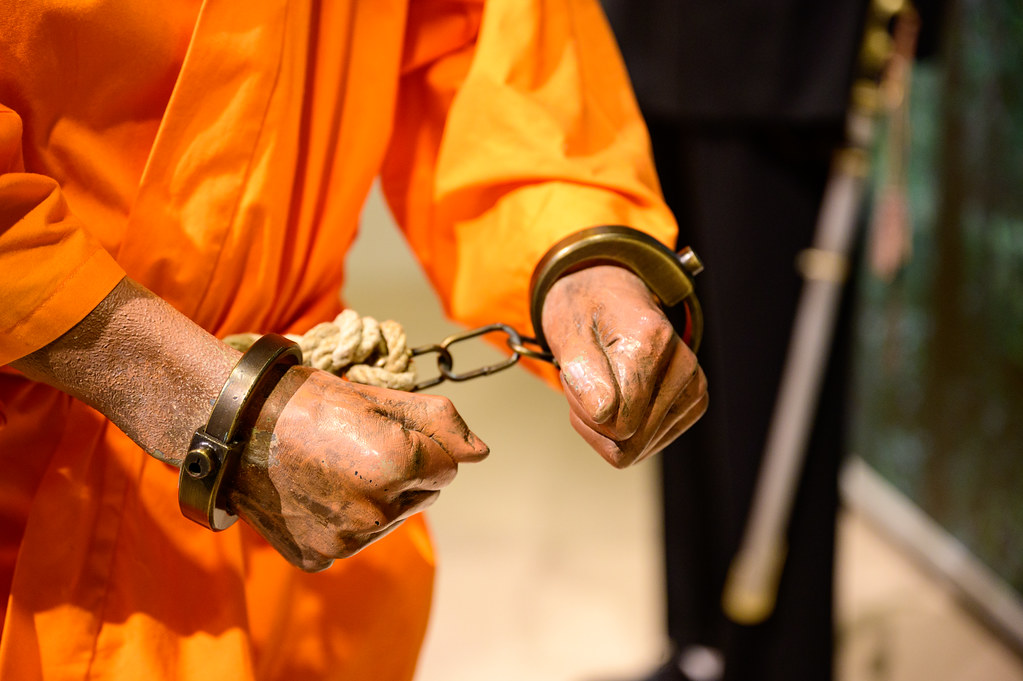
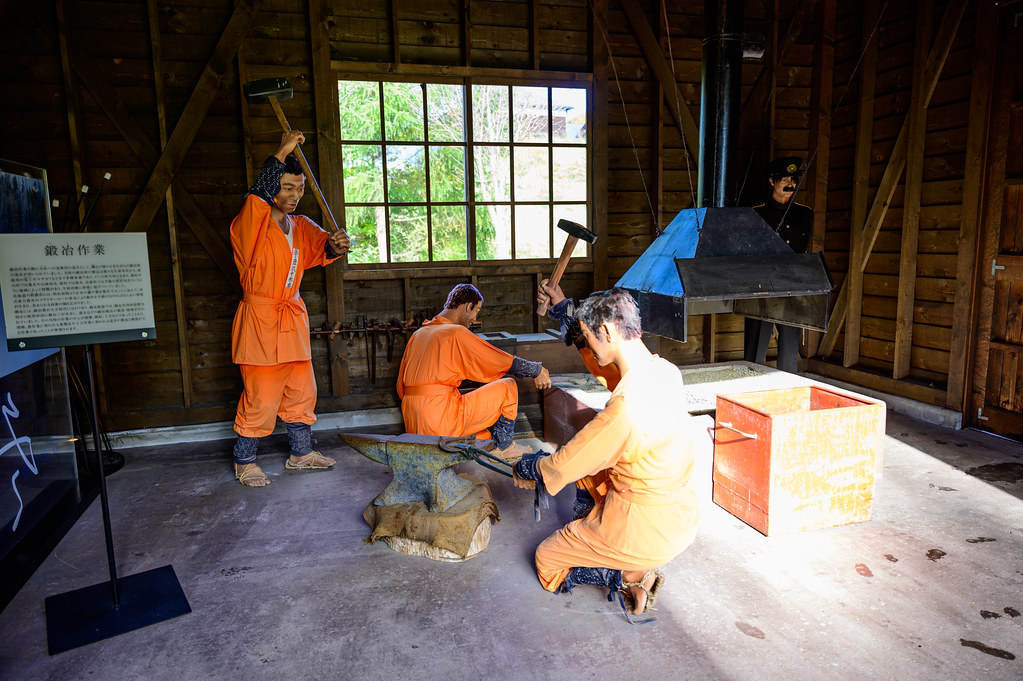
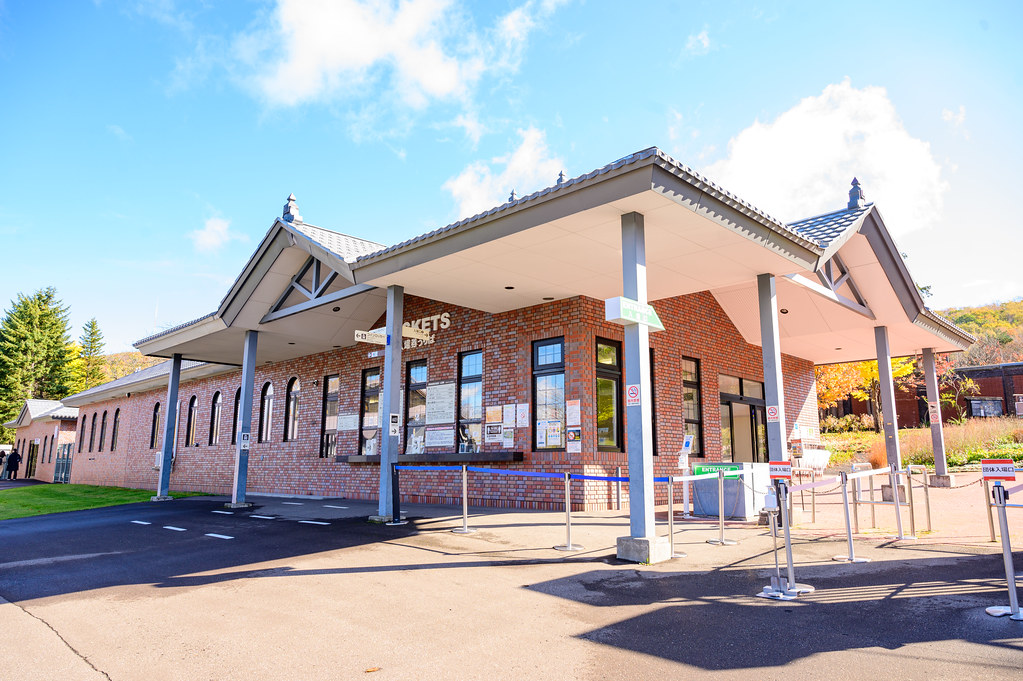
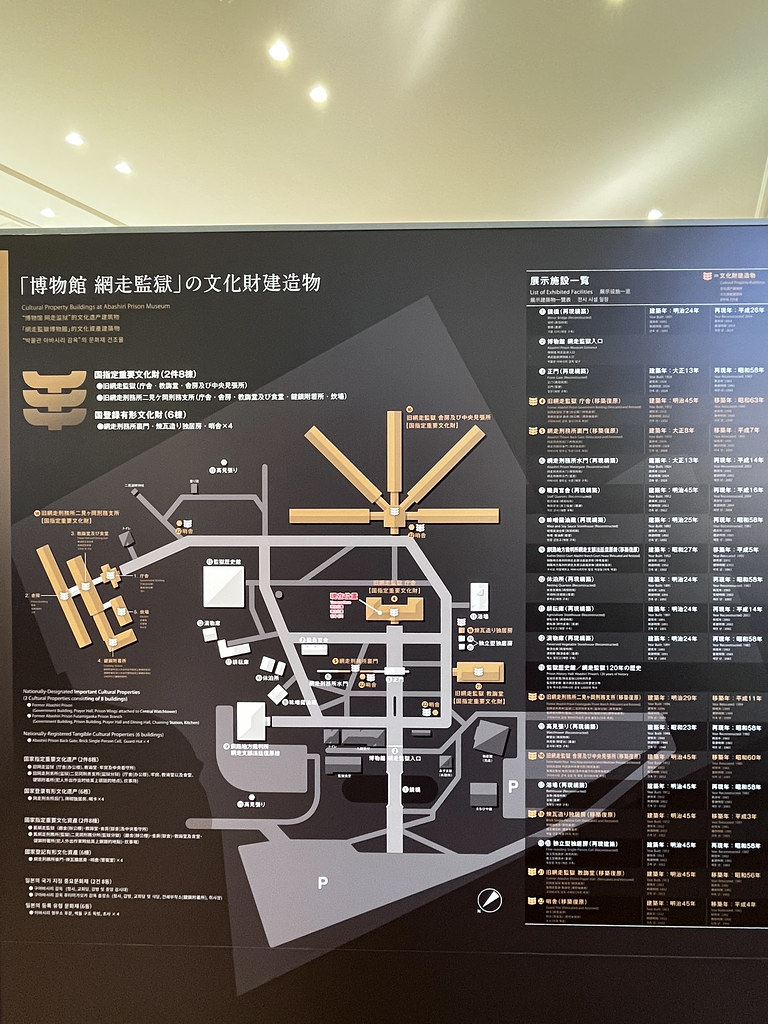
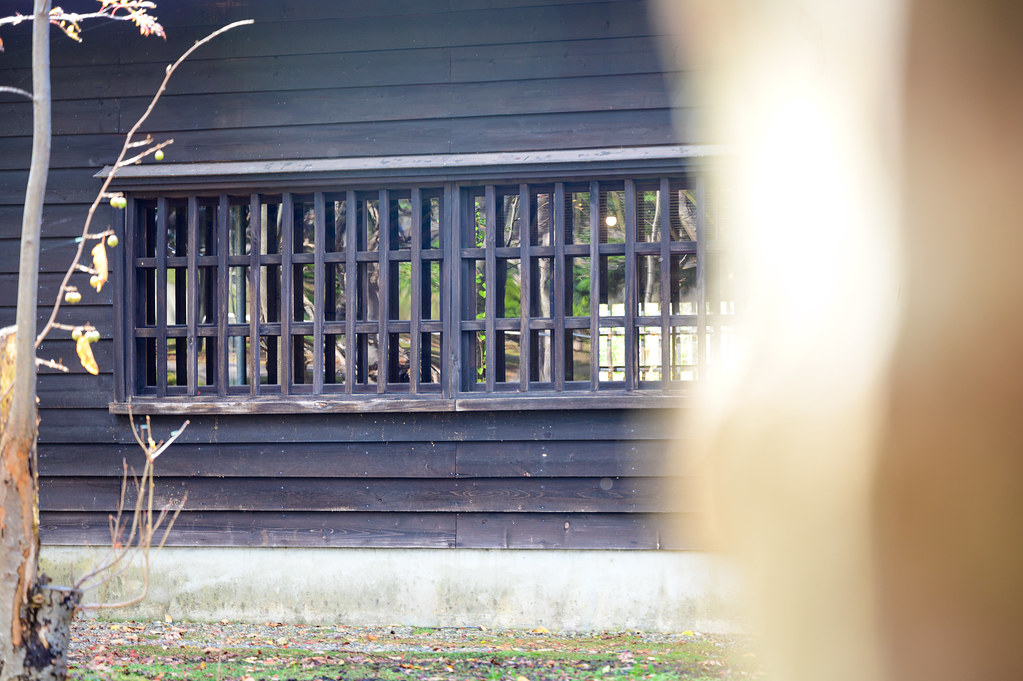
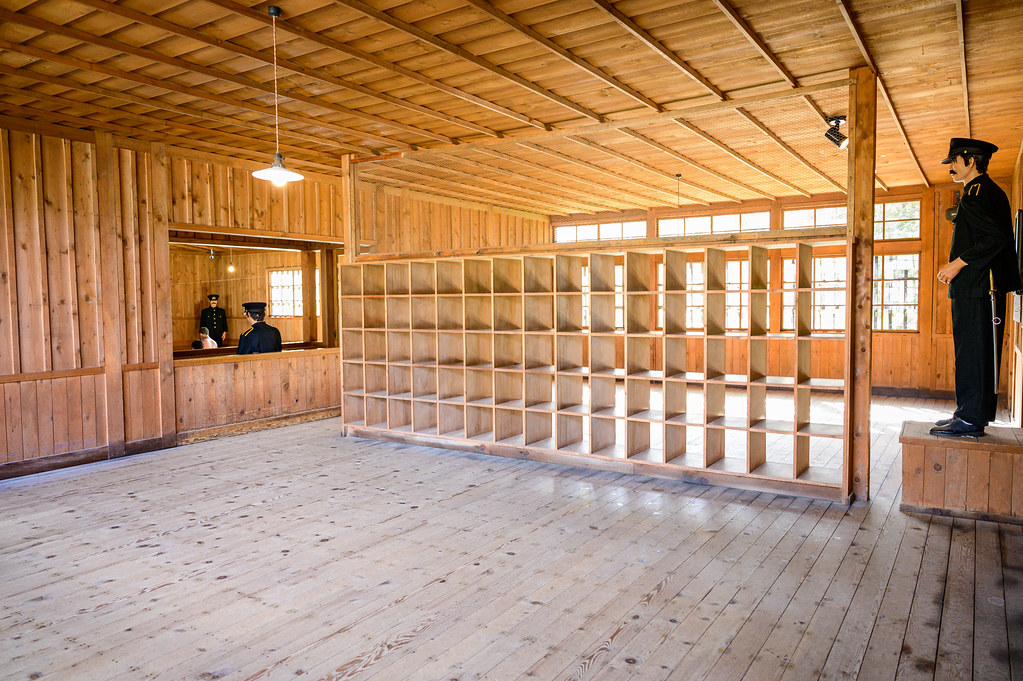
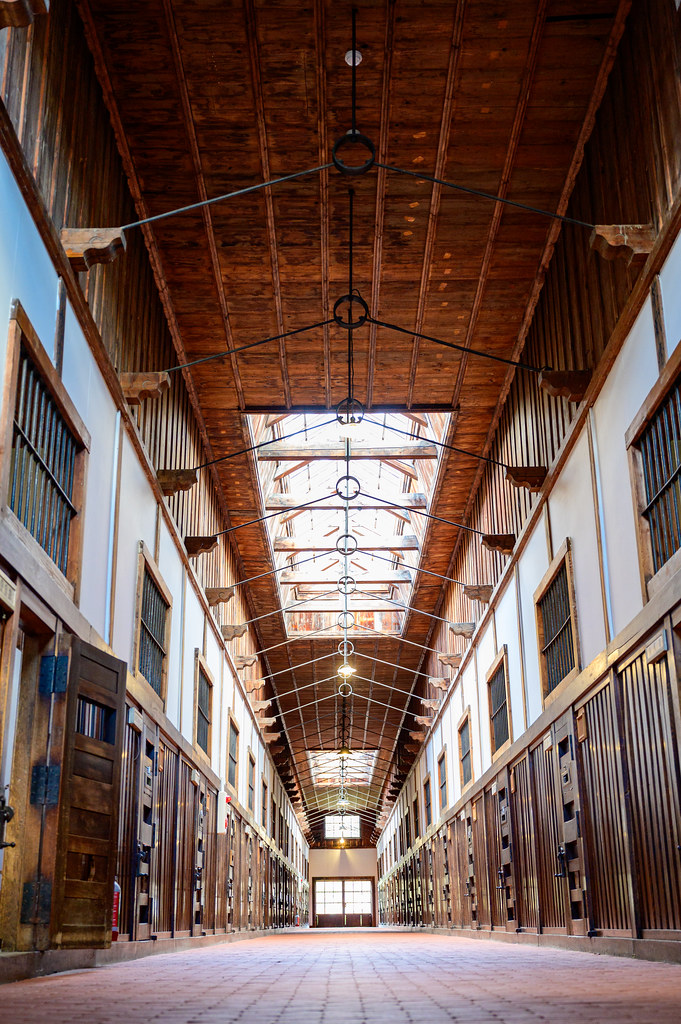
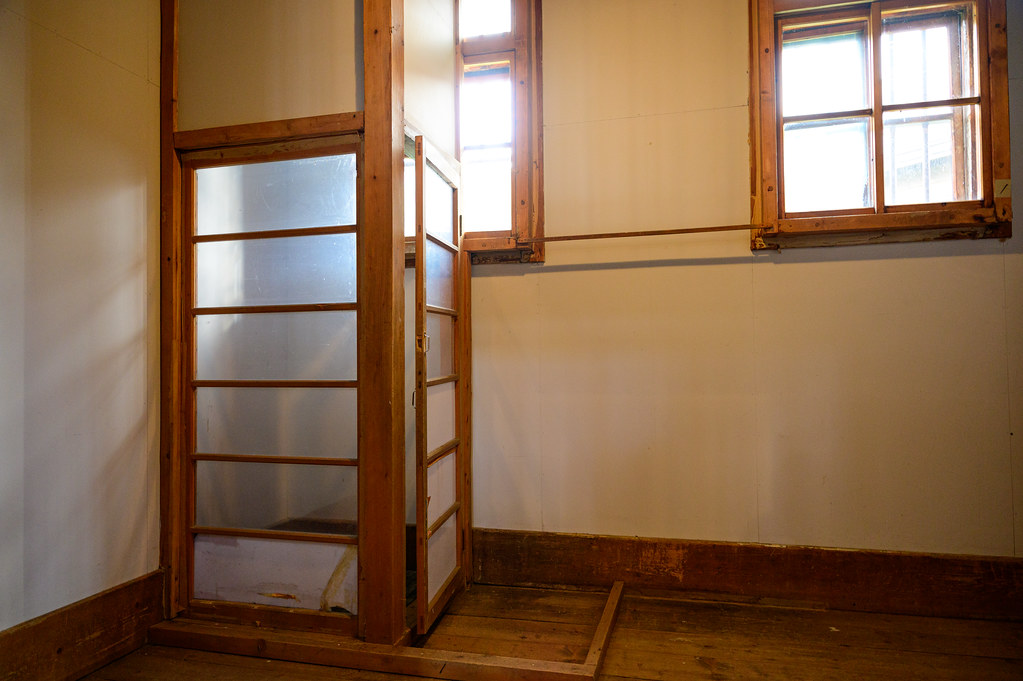
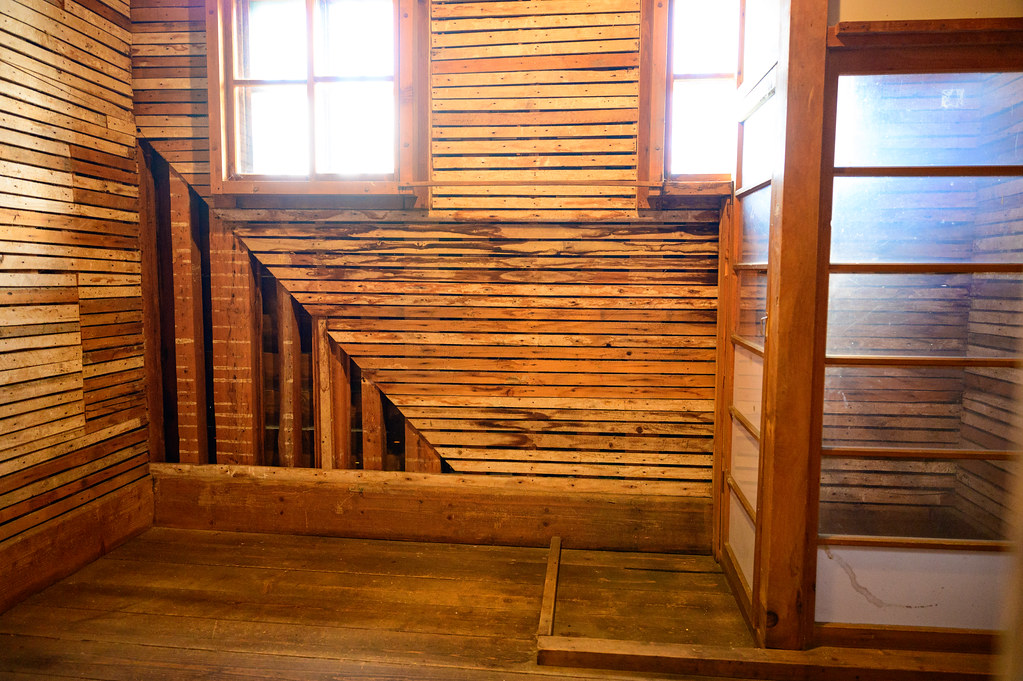
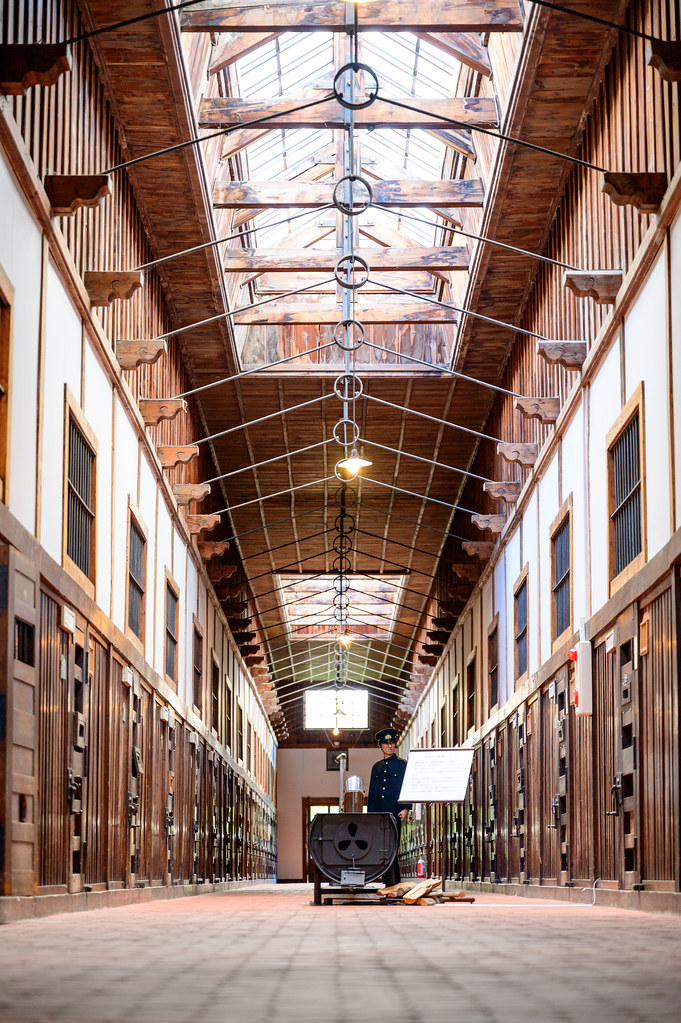
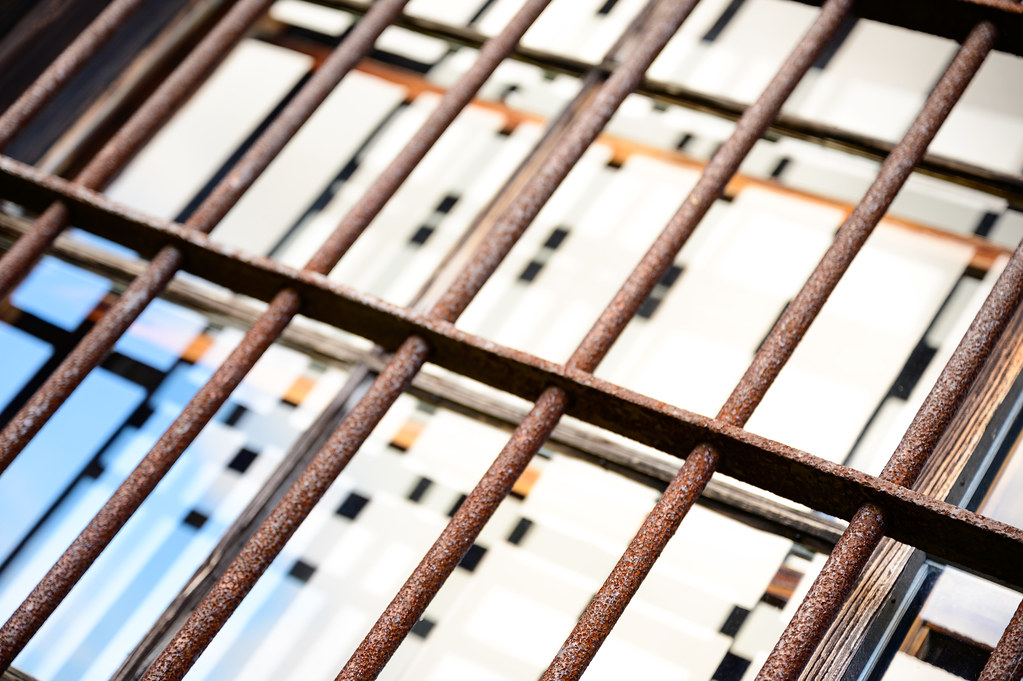
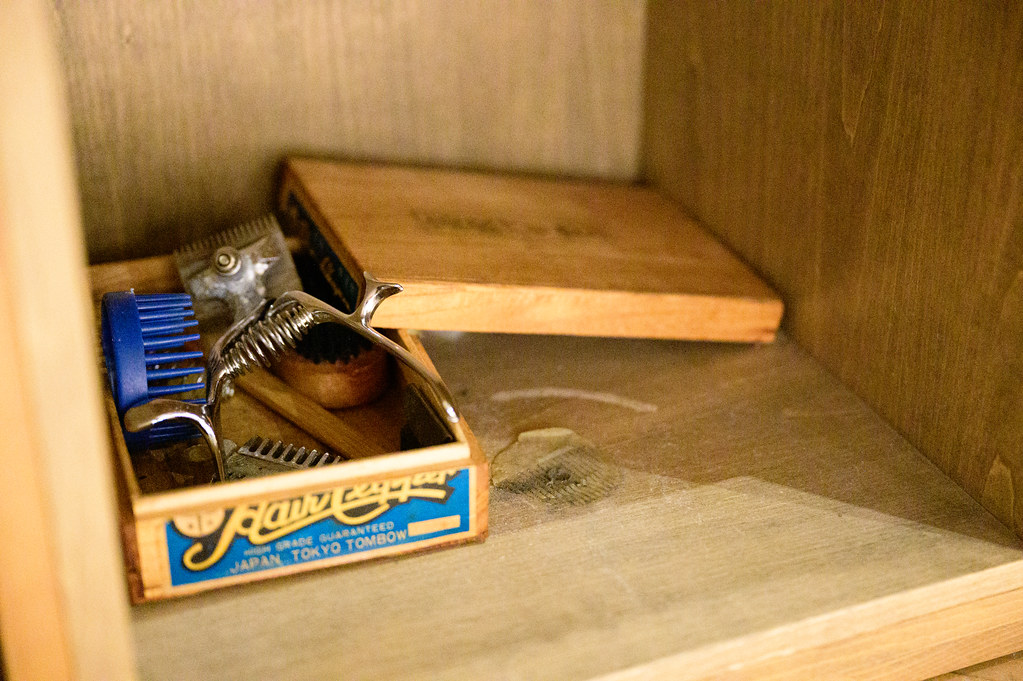
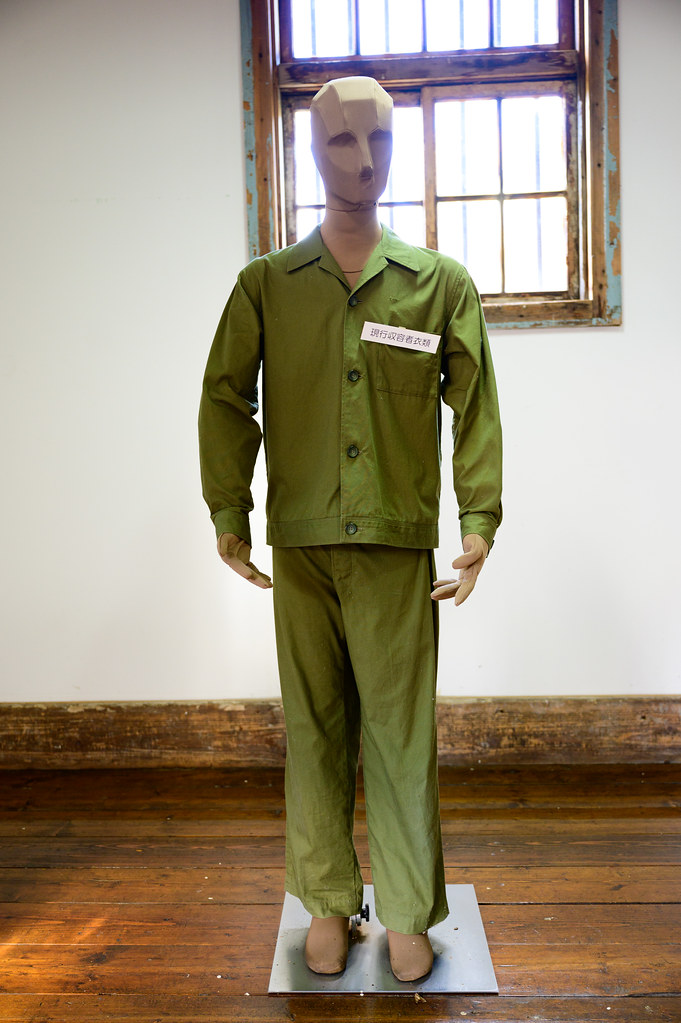
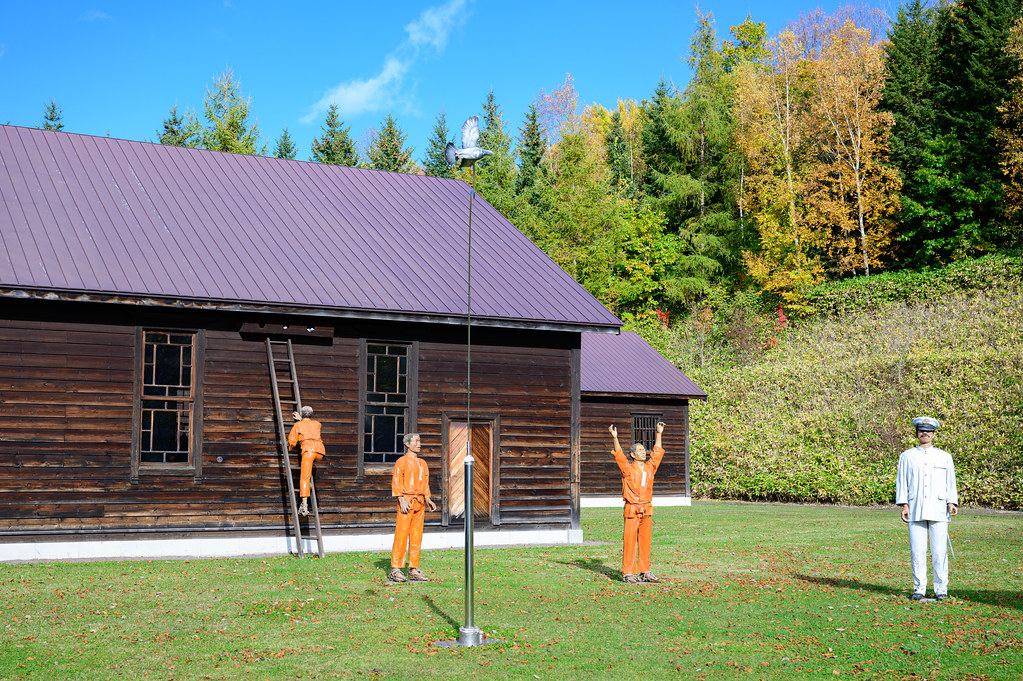
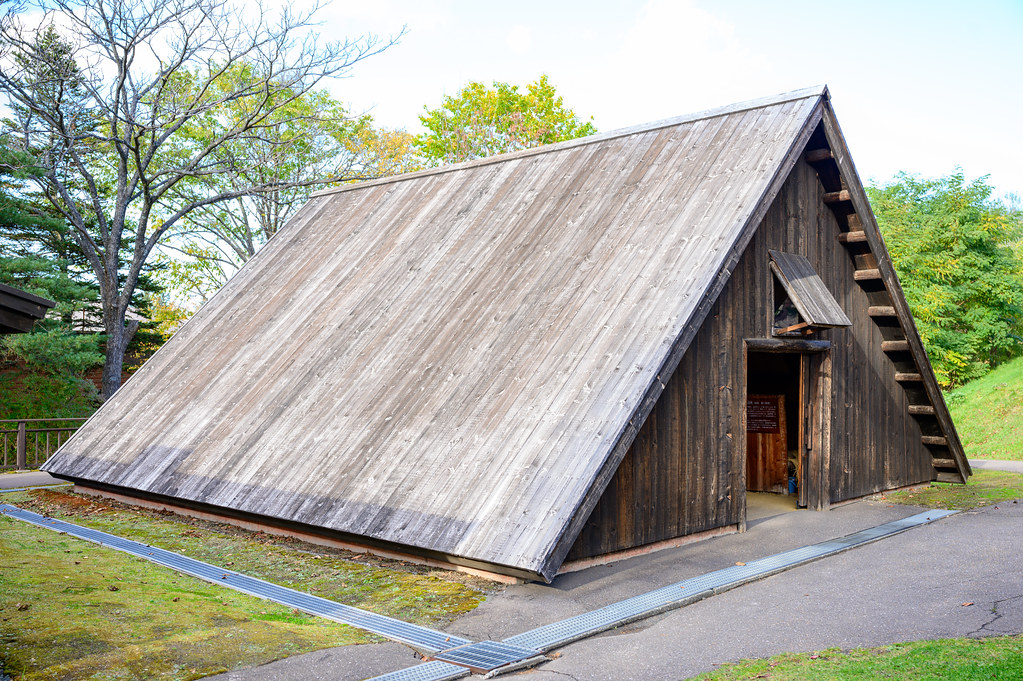
    We were taking one rest day to upgrade our equipment in preparation for the colder weather, but first, we had to visit the Abashiri Prison Museum on which the manga / anime Golden Kamuy (2014 – 2022) was based. This outdoor museum preserves / relocates old buildings that had been used in Abashiri Prison from the 19th century to the 20th century. Barren reconstructions, some of these buildings are classified as nationally important cultural properties by the Japanese government.
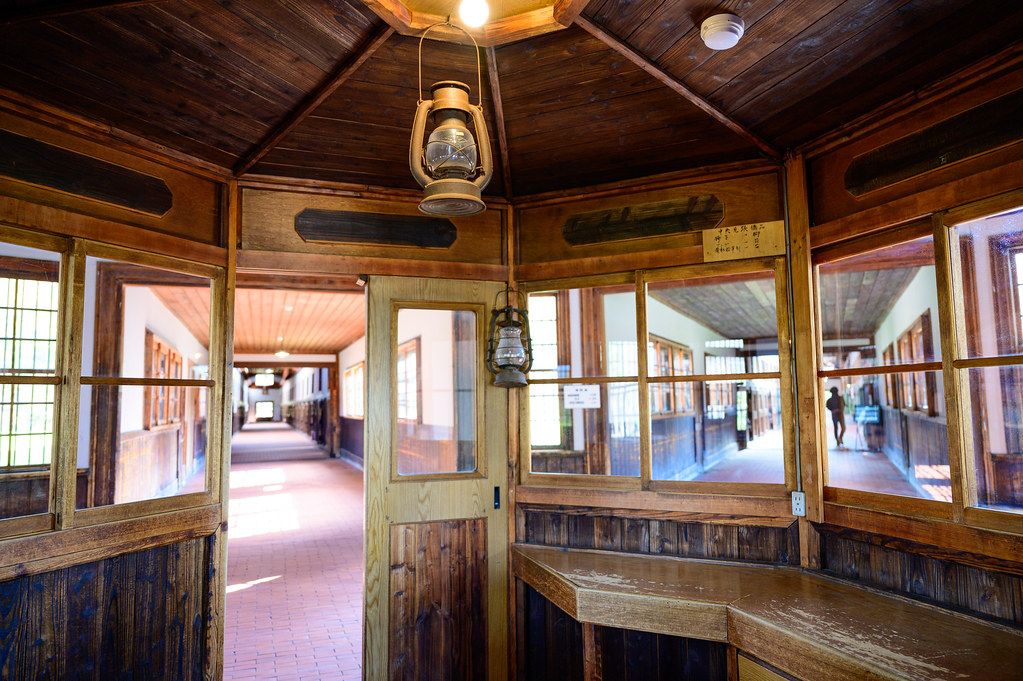
    Sometimes in the Japanese style, sometimes in the Western style, these buildings are linked by trails that too are decorated with sometimes Japanese, sometimes Western garden design. This interesting mixture provides a distinct aesthetic and learning experience for everyone interested in architecture and gardening.

    Political prisoners were sent to Abashiri which was a small fishing village during that period of political upheavals to develop Hokkaido. Beside farming, one of the most memorable achievements they had accomplished is the development of a road that runs through central Hokkaido. Due to extreme harsh living condition, malnutrition and heavy workload, many of them died before the construction ended.

    I personally enjoy my visit not only because I am interested in architecture, but also I was able to learn a great deal about Hokkaido’s history thanks to the translation that was provided for some exhibited items. 10 rubber stamps are hidden in the museum for visitors to collect, which add additional fun to the visit. In the History building, an extremely well staged projection of a short film narrating the development of the road can be viewed in 4 languages (Japanese, English, Mandarin and Korean). Overall, I think this place is worth a visit even for foreigners (although first, you have to climb the steep hill ).

    After our museum visit, we went to Uniqlo that is located on the other side of the hill to buy warm cloths. I must say that the sidewalk / bike path condition in Abashiri is the worst of all Japanese cities / towns / communities I have biked through. Its surface has many cracks, bumps, and potholes; it feels like biking in Montreal (this is by no mean a praise ). The street condition looks fine, though I would say it’s not as impressive as in the other Japanese cities.

    I took the opportunity to buy a new pair of prescribed eyeglasses mounted in a frame that is designed for sports with anti-slip feature, because my old one keeps jumping up and down on my face. A pair of Hoya ultra-thin clear lens (0.7 mm) with a high prescription (over -7.00) plus a frame for 19,800 yen — so inexpensive (by Canadian standard)! The eye exam alone took a solid 15 minutes, including both machine and manual checks. The optician double-checked everything with great care. Beside, if the lens is available on the spot, the wait time for the product to be ready is just 20 minutes. If the lenses aren’t in stock, it takes about five business days to prepare a new pair, or seven days for prescription sunglasses. If you can read hiragana, I recommend getting a pair of high-quality eyeglasses in Japan.

    For dinner, we headed to Sushi Dining Tsuki (鮨ダイニング 月迴轉壽司), a revolving sushi place nearby. Sadly, the belt wasn’t operating due to COVID restrictions — but the sushi was still excellent. The restaurant features locally sourced seafood that was fresh, delicious, and reasonably priced. Total win, even without the spinning plates!

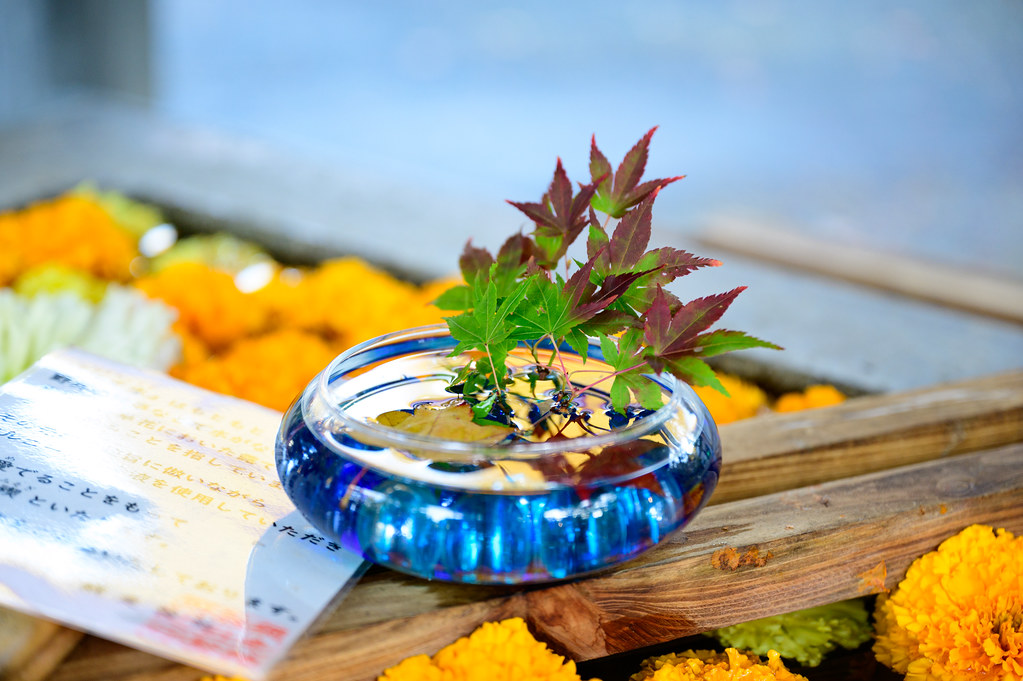
    Today, I also visited a shrine that had barely any visitor and added a second 朱印 to the collection I started in Biei.

    The full take — 210 more photographs from this day
    IMG_2167 DSC_4060-Pano DSC_4061 DSC_4062 DSC_4063 DSC_4064 DSC_4065 DSC_4066 DSC_4071 DSC_4074 DSC_4076 DSC_4080 DSC_4081 IMG_2171 IMG_2172 489522256_24173740845546182_1615087178098427749_n DSC_4084 IMG_2182 IMG_2183 DSC_4088 DSC_4090 IMG_2188 DSC_4091 IMG_2190 IMG_2191 DSC_4093 IMG_2198 DSC_4097 DSC_4099 DSC_4102 DSC_4104 DSC_4106 DSC_4108 DSC_4110 DSC_4111 DSC_4113 DSC_4114 DSC_4115 DSC_4116 DSC_4119 DSC_4120 DSC_4123 DSC_4124 DSC_4129 DSC_4132 DSC_4135 DSC_4136 DSC_4137 DSC_4138 DSC_4139 DSC_4140 DSC_4142 DSC_4151 DSC_4152 DSC_4154 DSC_4155 DSC_4158 DSC_4160 DSC_4163 DSC_4166 DSC_4167 DSC_4172 DSC_4173 DSC_4174 DSC_4176-Edit DSC_4177 DSC_4182 490106008_24173740618879538_7815048258025701913_n DSC_4183 DSC_4184 DSC_4191 DSC_4192 DSC_4193 DSC_4194 DSC_4204 DSC_4208 DSC_4210 DSC_4212 DSC_4219 DSC_4222 DSC_4223 DSC_4224 DSC_4225 DSC_4227 DSC_4229 DSC_4230 DSC_4233 DSC_4236 DSC_4238 DSC_4244 490329262_24173740852212848_2488404484862017697_n DSC_4245-Edit DSC_4247-Edit DSC_4249 DSC_4250 Rest Day in Abashiri — photograph 96 of 210 DSC_4258 DSC_4259 DSC_4260 DSC_4264 DSC_4265 DSC_4266 DSC_4267 DSC_4268 DSC_4269 DSC_4271 DSC_4272 DSC_4274 DSC_4275 DSC_4275 DSC_4276 DSC_4277 DSC_4278 DSC_4280 DSC_4281 DSC_4282 DSC_4283 DSC_4284 DSC_4285 DSC_4286 DSC_4287 IMG_2218 DSC_4290 DSC_4293 DSC_4294 DSC_4295 DSC_4297 DSC_4298 DSC_4302 DSC_4303 DSC_4304 DSC_4308 DSC_4309 DSC_4310 DSC_4312 DSC_4313 DSC_4314 DSC_4315 DSC_4321 DSC_4325 DSC_4328 DSC_4329 DSC_4330 DSC_4331 DSC_4337 DSC_4342 DSC_4343 DSC_4345 DSC_4351 DSC_4352 DSC_4353 DSC_4354 DSC_4358 DSC_4361-HDR DSC_4362 DSC_4363 DSC_4364 DSC_4366 DSC_4367 DSC_4369 DSC_4370 DSC_4371 DSC_4372 DSC_4373 DSC_4374 DSC_4375 DSC_4377 DSC_4379 DSC_4380 DSC_4381 DSC_4383 DSC_4384 DSC_4385-Edit DSC_4390 DSC_4392-Edit DSC_4396 DSC_4397 DSC_4398 DSC_4399 DSC_4400 DSC_4401 DSC_4402 DSC_4403 DSC_4405 DSC_4406 DSC_4407 DSC_4408 DSC_4409 DSC_4410 DSC_4411 DSC_4412 DSC_4415 DSC_4419 DSC_4423 DSC_4424 DSC_4426 DSC_4427 DSC_4430 DSC_4432 DSC_4433 DSC_4434 DSC_4440 DSC_4443 IMG_2248 IMG_2249 IMG_2250 IMG_2250 IMG_2252 IMG_2253 IMG_2254
    Ride replay on Relive
  • Day 13: Numanoue to Abashiri

    Date
    2022-10-24, Monday
    Distance
    93.51 km (808.68 km in total)

    After I got up at night, I saw a cat that seemed to be living in the wild rummaging through our trash and drinking our milk. It's strange to me, as I had been told that cats don't have the ability to digest a certain substance in the milk, but this cat seems fine after drinking it. Quite impressive a demonstration of survival instinct.

    The toilet at this campground uses an eco-friendly composting system: beneath the toilet is a sand pit, and there is a button that stirs everything into the tank below to eventually be turned into fertilizer. Very unique, but I still missed the comfort of a good warm bidet.

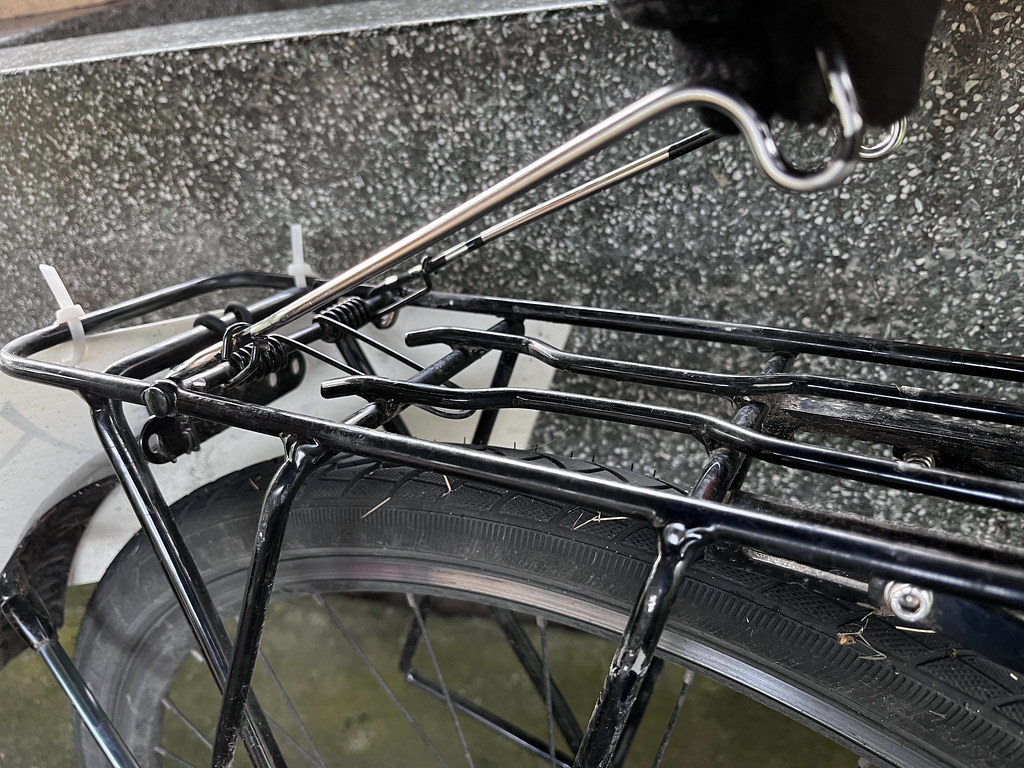
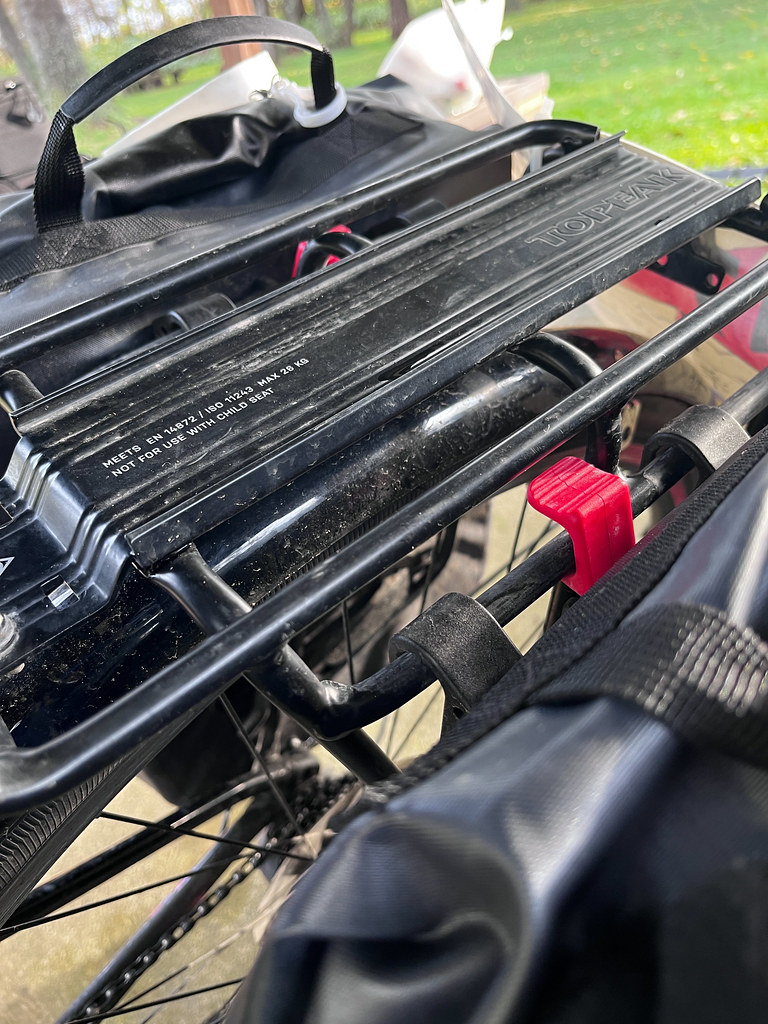
    We started the day by switching our rear panniers because the Topeak trunk bag I gave my friend (to replace her broken backpack) doesn't fit her rack very well. This results in the bag jumping around and sometimes falling down from the rack when we bike through a bumpy surface. Being the stronger of us, she is carrying more weight now.

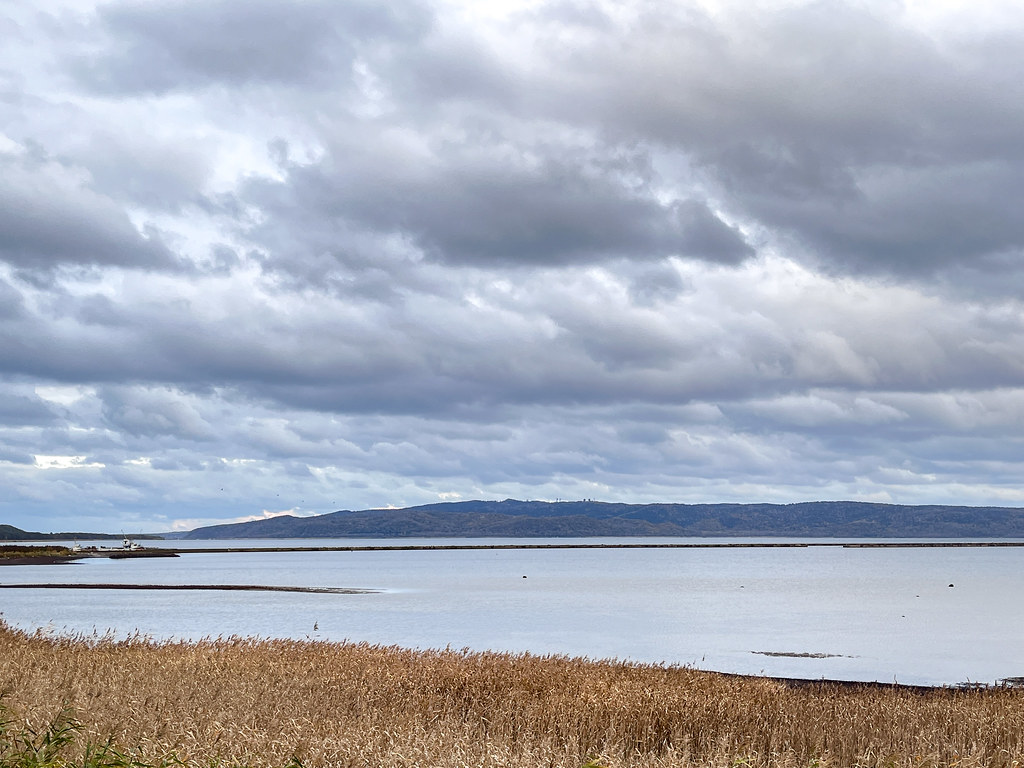
    Today we headed to Abashiri along National Route 238 that goes around two lakes. The first is Saroma Lake, the largest lagoon in Hokkaido that is separated from the ocean by a narrow landform. Its water, being of mixed-sand, has therefore two distinct colours: the further one turquoise-ish, the closer one brownish. This feature is particularly visible from higher elevation. At the roadside station located next to this lake, I heard a song singing 'Sa-ro-ma Saroma~ Sa-ro-ma Saroma~' in a musical style that recalled the battle songs in Kamen Riders in Japanese tokusatsu (特撮, literally 'special effects') TV drama.

    Only until now did I realise that the songs we have heard so far were all specially composed theme songs for the towns or roadside stations we passed through. They are surprisingly diverse: from cutesy earworms to fiery fight songs or even ones that sound like superhero anime openings. The catchiness is real: once you have heard one, it loops in your head relentlessly. (Terrifying, but in the best way.)

    The second lake was Notoro Lake, which is smaller than Saroma Lake but still takes hours to go around it. From a small town called Tokoro easterward, there is a dedicated bike trail parallel to National Route 238 bridging between the town and the city of Abashiri. It was a nice scenic ride with tons of foliage and cute roadside decorations until we hit an inundated area. We had to bike in the dark on the main road again.

    The weather was nicer today even though the sky remained overcast. We stayed bundled in our full rain gear just in case. We passed through many hills but natural beauty such as that which can be observed in a blooming canola field made us feel aesthetically and spiritually fulfilled. By the time we neared Abashiri, the clouds parted behind us and actual sunbeams broke through — like a blessing from the weather gods.

    After checking in what would be our home for two nights, my friend brought me to experience a meal at an izakaya that offered fresh seafood, although I don't drink alcohol. It feels nice to have a warm space to wash our clothes, dry our tent and enjoy a bath in an onsen. However, obviously, we can't afford staying in a hotel every night.

    Tomorrow will be our first rest day. We will upgrade our winter gears in preparation of the colder weather to come.

    The full take — 26 more photographs from this day
    IMG_2011 IMG_2013 IMG_E2016 IMG_E2018 IMG_2022 IMG_2029 IMG_2031 IMG_2034 IMG_2036 IMG_2038 IMG_2042 IMG_2046 IMG_2047 490091032_24173725258881074_3571947800740607693_n IMG_2050 DSC_4042 IMG_2057 IMG_2063 IMG_2068 IMG_E2073 IMG_E2078 IMG_E2081 IMG_2083 IMG_E2085 IMG_E2089 IMG_2090
    Ride replay on Relive
  • Day 12: Omu to Numanoue

    Date
    2022-10-23, Sunday
    Distance
    59.22 km (659.22 km in total)

    At about 4 am, we were awakened by the sound of roaring guists constantly blowing our tent — guess that’s the price we had to pay for a campsite with an unbeatable ocean view. Afraid that the tent may not withstand so insane a wind gust, we got up early to pack up our stuff and have breakfast next to a building that happened to be the washroom.

    Honestly, Japanese washrooms are so clean and well-equipped you almost feel like you could pitch your tent inside. There’s water, electricity, heating, and even washlet toilets — a small comfort that warms the soul on a cold morning.

    Starting off gray, damp, and chilly, the weather today was not very cooperative: it rained, rained, and rained all day and night. As a consequence, the sunrise wasn't visible, and we had to bike in wet conditions for the entire stretch of the day. The temperature feels lower when humidity is high. We would feel cold if we stayed stationary for over a few minutes. It was quite a miserable day.

    All facilities were closed at the campground we chose to stay tonight except the waterless Bio-Lux toilet. It's basically a hole filled with biodegradable sawdust that decomposes human waste that becomes organic fertiliser later.

    We were not the only crazy people camping on a rainy night: there was another couple setting up their tent in the campground, only that they were less crazy than us, as they drove here. I didn't have the chance to speak to them nor ask them a myriad of questions. However, today, I had two very brief conversations with two adults and two young kids. The former exclaimed at seeing our cross-Japan posters, then asked where we were from. The latter, who didn't seem to be able to read kanjis, asked me what our posters meant. I tried to carry the conversation, but whenever I made it known that I came from a foreign country and was not that skilled at speaking their language, the locals would show disinterest in conversing with me by simply wishing me safe travel then waving goodbye. This reaction from the children is understandable, as they may not know where Canada is or understand why an Asian-looking lady doesn't speak Japanese very well, but the same shouldn't apply to the adults. It leaves me perplexed as to what may be wrong with my approach …

    Ride replay on Relive
  • Day 11: Esashi to Omu

    Date
    2022-10-22, Saturday
    Distance
    55.95 km (655.95 km in total)

    Last night's camping experience was formidable with a bit of surprise. Our chosen location hidden in the depth of the bushes was quite discreet, but before we slept I heard some heavy footsteps which didn't sound like humans. We were guessing it might have been a deer.

    At midnight it started raining at time heavily (I know this because I as usual woke up after 4 hours of sleep), but luckily in the morning when we embarked the weather was good. Or at least, part of it was. During the whole day, we were chased by dark clouds that were moving in the same direction as us. As we took breaks from cycling, the clouds would catch us up and bring some droplets of water from the sky. Once we put our rain gears on, the rain would stop; yet once we took our rain gears off, the rain would start.

    Our destination was a campground next to a lookout tower built right next to the ocean floor. As was expected, the campground was closed for the season, however, the washroom remains open (and regularly cleaned, it appears) and water was still running. We chose a crazy location to set up our tent: on the second floor of a gazebo, right facing the ocean. We are hoping to see a spectacular sunrise above the ocean.

    Ride replay on Relive
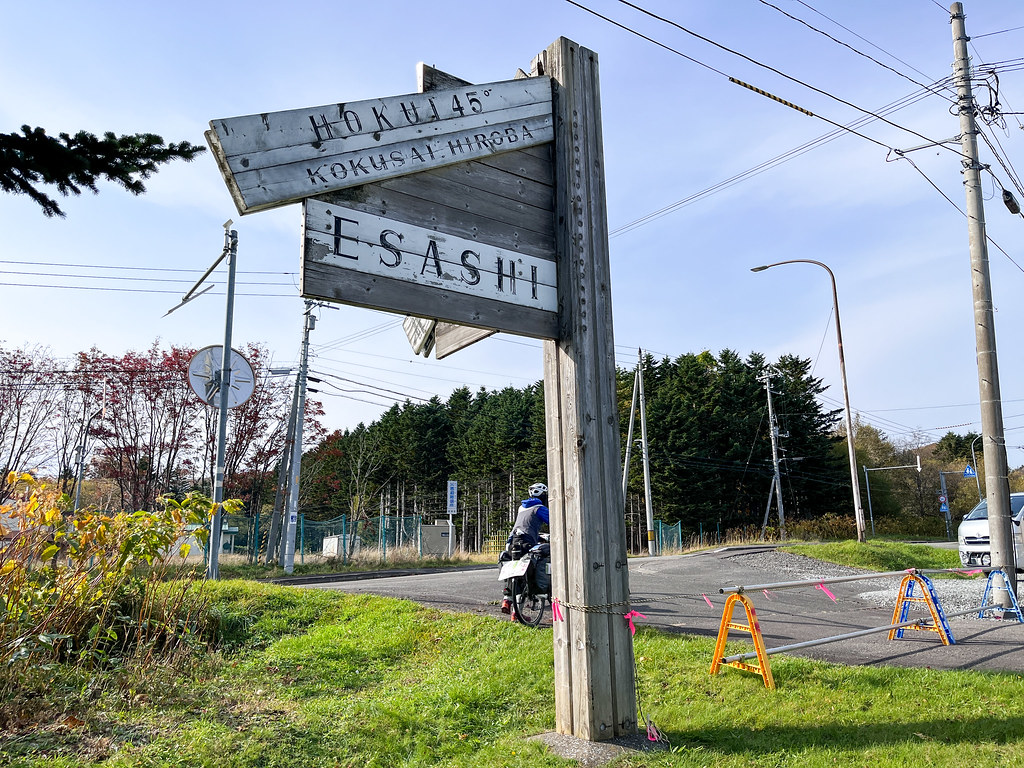
  • Day 10: Hamatombetsu to Esashi

    Date
    2022-10-21, Friday
    Distance
    37.18 km (600 km in total)

    Following the doctor’s recommendation, we finished today’s ride earlier, ending our record of biking in the dark for 3 consecutive days.

    Today’s ride has little to highlight except one nice encounter in front of the grocery store. A lady who had the experience of bicycle touring in Japan came to talk to us (in Japanese) in a friendly manner that is unusual for Japanese people (with a smile and an unblushingly speaking tone). Such friendliness really encouraged us!

    We biked most of the time along the shore, with the ocean on the left side and the hills on the right. The view is quite majestic but at some point it became monotone.

    This area feels remote still with little to nothing that hints at humanity between the towns / villages. I have wanted to photograph a Japanese fishing village but everywhere was marked with 'Private. No trespassing' sign that's not inviting at all. I have just come to realise that when photographing the fishing boats in Canada, I was probably stepping on private land. However, in Canada, there is rarely such a warning or physical object set to delineate the boundary between the private and the public. When people see me taking pictures, Canadians usually say hello with a smile, making me even less aware of my trespassing. Although Japanese houses don't tend to have fences, the omnipresence of which around country houses was one of my first shocks when bicycle touring in Europe, the heavy presence of the warning signs is quite intimidating to me.

    I noticed that everywhere near the ocean was marked with the elevation of the location. Our guess is that it’s meant for letting people know where to go in case of tsunami evacuation. (Can someone verify our hypothesis?)

    We arrived at the Esashi town centre at 1:20pm to find out that all restaurants are either closed or about to close. Most of the time it felt like a ghost town had there not been occasional passing of the vehicles. I am really curious if most people in this town commute to bigger places to work because there seems to be very little industry remaining here.

    By 4:30pm, we found a roofed gazebo in a campground that was closed for the season next to the roadside station of Esashi to pitch our tent. The cashier at the roadside station was so caring and afraid that we might get cold by sleeping outdoor as to show us the heated area that will remain accessible to the public after the closing time. Her clear manifestation of care and worry, which may be a rare thing for Japanese people, made me feel really good.

    I did use the heated area to comfortably write my diaries when I woke up at midnight. There is even a vending machine that does the magic of producing hot drinks on the spot — imagine this high technology in a rural town of Japan!

    Ride replay on Relive
  • Day 09: Cape Soya to Hamatombetsu

    Date
    2022-10-20, Thursday
    Distance
    70.04 km (562.82 km in total)

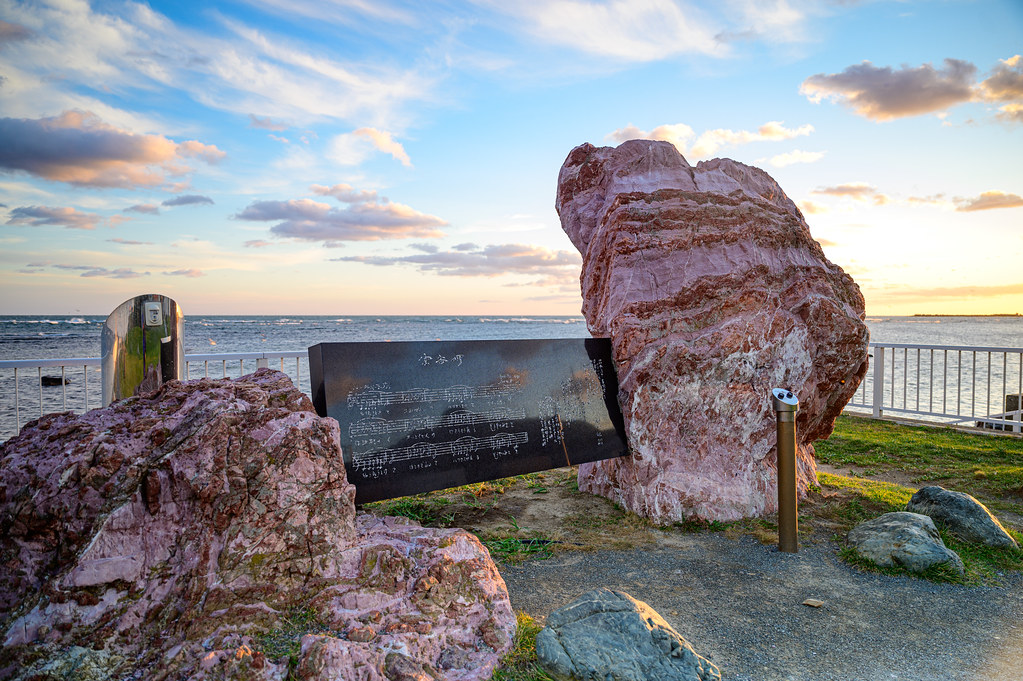
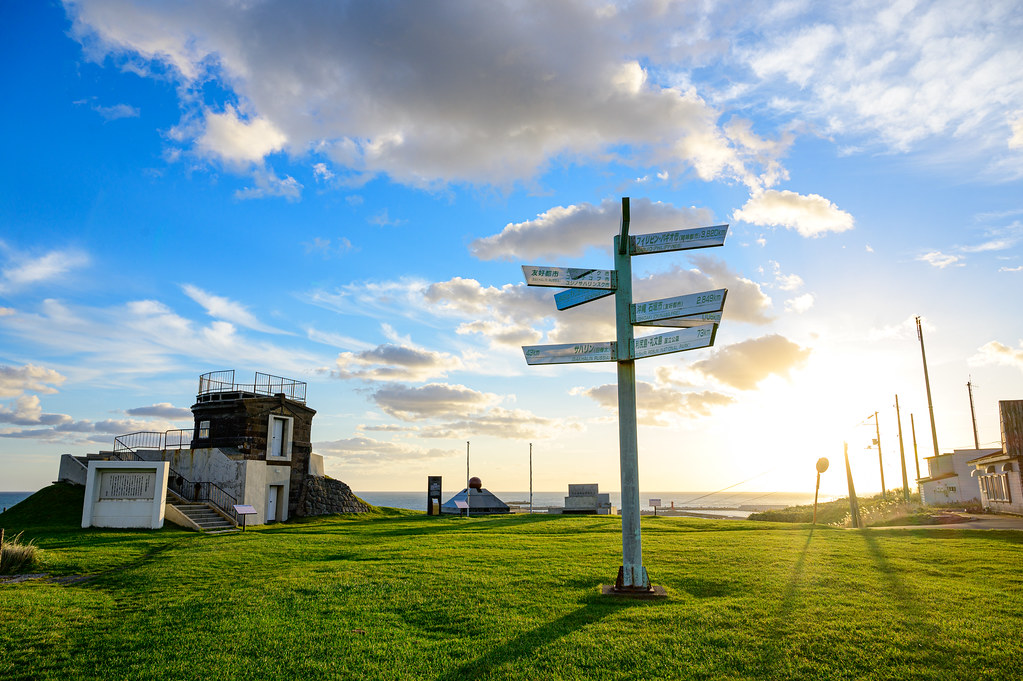
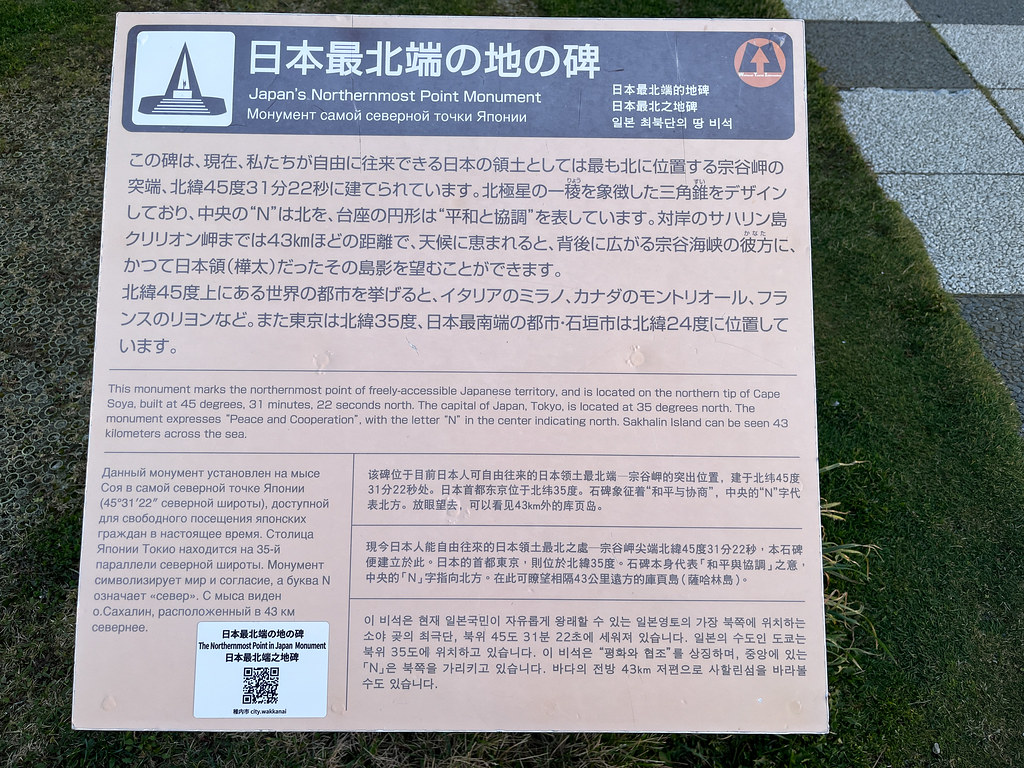
    Here in Cape Soya, the northernmost point of Japan, everything and everywhere claims to be the northernmost: school, restaurant, bus stop, shinto shrine, etc, and even the vending machine!

    We woke up a little after 5 a.m. to catch the sunrise, packed up, and warmed ourselves with a hot bowl of miso soup and coffee. The view of the sunrise is quite spectacular. Even during the early hours at dawn, sporadic visitors keep coming to photograph or be photographed with the monument. I can’t imagine how many people there usually is during the day. The fact that there are 3 public toilets nearby — two down the hill facing each other, one up on the hill — gives hint at the popularity of this place.

    We also tried the local specialty — scallop ramen — at Japan's northernmost restaurant. After painting two promptly designed posters that state our goal to bike across Japan, we went to mail some unused stuff back home at the post office — of course, the northernmost one. These objects include a camera lens, short sleeve shirts, things that will only be used in Taiwan, and painting tools. We naively thought that we could do some sketches and/or watercolour paintings at the end of a ride or during the rest days — wrong! There is absolutely no leisurely time for this activity, for once the night falls and our ride is done, all that we want to and still have the energy to do is eating, taking showers, and sleeping. So for now, camera remains the best companion for a travelling artist.

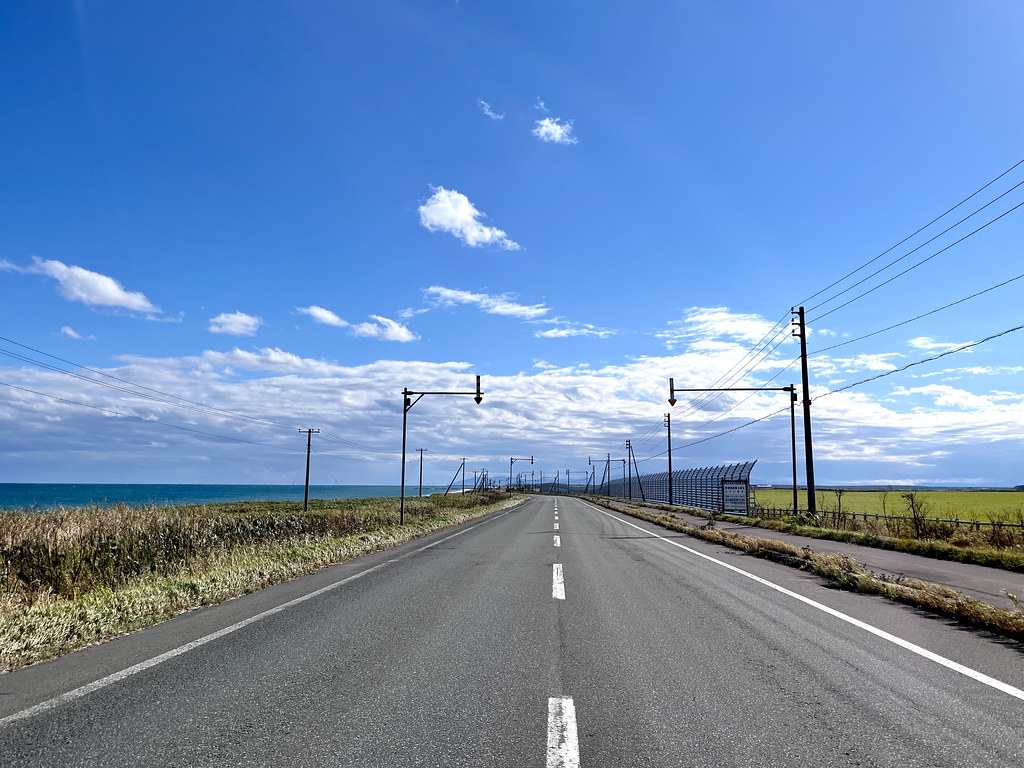
    It was nearly 9:30 a.m. by the time we finally hit the road. The coastal roads of Hokkaido are absolutely stunning. Step off the shoulder and you are right at the sea — clear shallows, rocky reefs, and shifting waves. Seagulls and eagles glide overhead or float gently on the water’s surface. It’s breathtaking.

    We were directed by Gooogle Map to a small village called Onishibetsu looking for a pharmacy where I could buy some pain relief cream or medication for my knee pain. We were surprised to learn that the pharmacy no longer existed and after many attempts at communication, I ended up in the hospital being seen by a medical doctor who could speak English. He gave me ‘that look’ when hearing that after I had fallen from my bike, I rode another 300 km in pain to finally seek for medical help.

    My tolerance threshold for physical discomfort seems to be higher than that of average people. I can endure pain, hunger, thirst, physical fatigue, etc. to a larger extent than what ordinary people could possibly tolerate. This is both an advantage and disadvantage. I was able to accomplished two multi-months bike tours thanks to this attribute, yet at the same time I often push myself to the very limit that can be life-threatening — for instance, I nearly lose consciousness in the Prairies due to hypothermia.

    Biking with others, I think, makes me listen more carefully to my body. I am enjoying it.

    My injury is nothing serious. There is no break, I can stand up (thus push most of body weight on my knees), walk more or less normally. It only hurts when I bend my knee to a large degree — therefore pedalling causes pain. The doctor ordered rest, saying it will heal by itself quickly if I don’t bike 90 km a day.

    This prescription is well nigh impossible for me to observe, in that winter is coming, I need to leave Hokkaido as soon as possible. For this reason I am considering getting a lift to Nerumo or from Nerumo to Hakodate, but the likehood for getting such a lift in Japan is really improbable for two reasons. One, Japanese cars tend to be too small for two people plus two bicycles. So far the most common type of semi-trucks I have seen on the road only has two seats. Two, hitchhiking doesn’t seem to be very common in this part of the world. The odds for me to find someone willing who has the right vehicle are very low.

    Hence, the solution we came up with is to reduce the hours spent on the saddle for the moment until I no longer feel knee pain. For the next few days to possibly weeks, we will travel at a slower pace. Luckily, according to weather forecast, it’s not getting much colder too soon.

    Another medical doctor saw my Canadian flag on my bike and came to speak to us. He doesn’t seem to speak much English but was so nice that he said he had ‘medicine’ for us. While we were expecting things ranging from pain relief cream or energy gel, he brought us a tons of 500-yen coins to use when we need. This is really good medicine! Honestly, we were floored by his generosity and warmth.

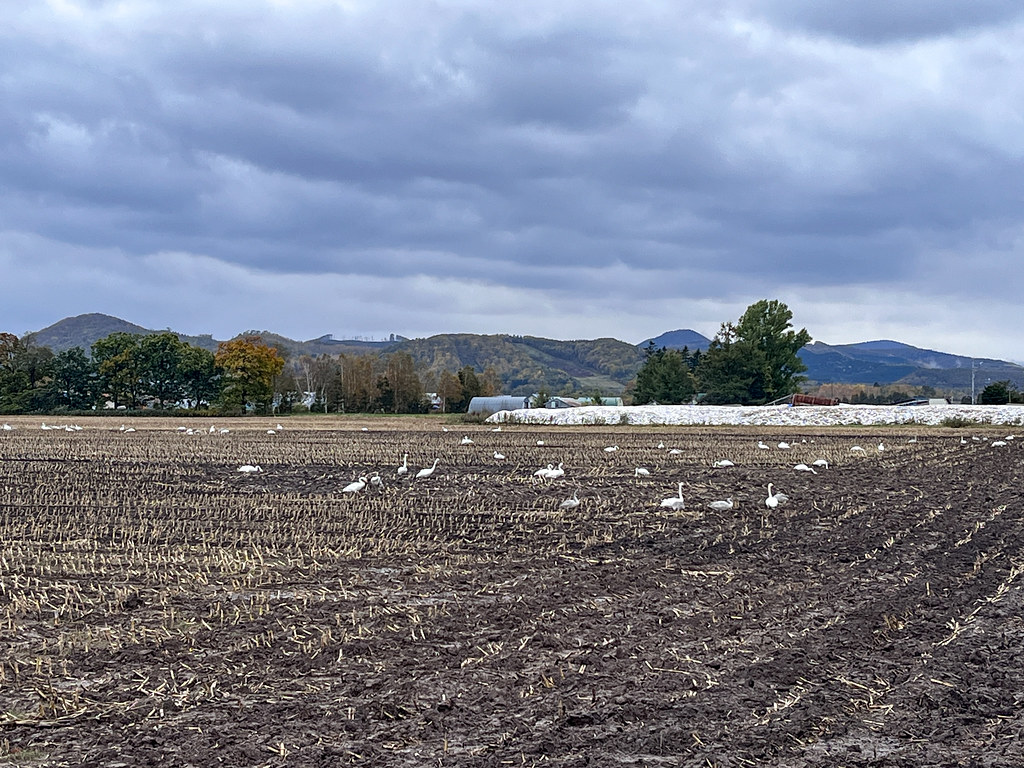
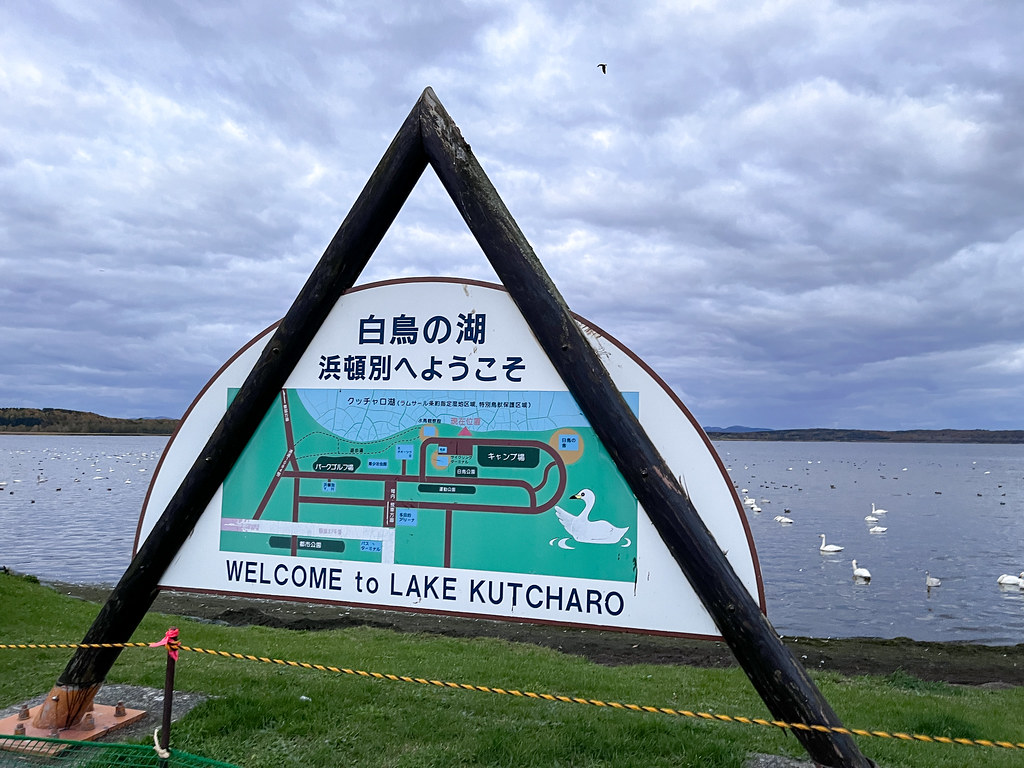
    At night we went back to camp in the companion of countless lousy piggy swans that squawked all night in Hamatonbetsu.

    The full take — 29 more photographs from this day
    DSC_3835-Edit DSC_3846-HDR IMG_1760 IMG_1761 DSC_3864 DSC_3865 DSC_3869-HDR IMG_1764 IMG_E1765 DSC_3878 IMG_1766 DSC_3880 DSC_3885-HDR DSC_3887 IMG_E1772 IMG_E1774 IMG_1777 IMG_E1776 IMG_E1779 DSC_3897-Edit-2 IMG_E1784 IMG_E1786 IMG_1789 IMG_E1791 IMG_E1793 IMG_1795 IMG_1797 IMG_1799 IMG_E1801
    Ride replay on Relive
  • Day 08: Hamatombetsu to Cape Soya

    Date
    2022-10-19, Wednesday
    Distance
    63.3 km (492.78 km in total)

    Today we finally went to Cape Soya, the northernmost point of Japan, where we were supposed to officially start our journey a week ago according to our original plan. Due to an issue with the train, we ended up biking an extra 500 km from Sapporo northward to this starting point.

    We passed through a very rural area along the shore, where the population is sparsely distributed. It finally feels much more like Canada's population density, which I am used to but which my Taiwanese friend finds so foreign. As the traffic got lighter and lighter, we were more and more into the very heart of Hokkaido. Yet even in this remote area, there is sometimes a sidewalk along the road, which I am not sure for whom it was paved.

    I was surprised to see so many dairy farms — in fact, most land in this area is pasture presumably used for grazing — that are located so close to the ocean. Doesn't the soil become very alkaline by consequence? It's impressive that they can grow so large an expanse of grass to produce Hokkaido's impressively rich-tasting milk!

    By noon, we reached Sarufutsu, which claims to be the northernmost village of Japan founded roughly 100 years ago. The first kanji of the village's name saru means monkey in Japanese, and the second one is incomprehensible for a Chinese-language speaker, thus we have given this village the nickname of monkey village (猴子村). At the only 'standard' restaurant, we ordered 3 servings of food for the two of us. The waiter must have been shocked to see empty plates in the end!

    The last stretch of the road includes some horrible hills to climb in extremely windy condition. The wind up north along the coast is brutal. A quick check showed that the Japan Meteorological Agency had issued a strong wind warning — which explains why it felt like we might actually take off into the sky.

    However, the view of the ocean from the top is so rewarding that it makes us forget Mother Nature's caprice. We reached the monument of the northernmost point of Japan at dusk (aka the blue hours) to find out every facility except the washrooms was closed and/or locked. We sneakily found a spacious bus shelter that had roof and door to prevent us from being blown away by the increasingly strong wind (the speed of which was at least 70 km/h, possibly up to 100 km/h), and decided to call it home for tonight, despite the visible warning on the wall that stated this place could not be used for purposes other than waiting for the bus. Lazy to cook, and still full from lunch, we purchased warm soups and drinks from the vending machine and then wished each other a good night of sleep.

    P.S. We saw several Ezo deers today. They just stare at us like they are trying to decide if they should run. A bit silly, when they do flee, their fluffy white tails on the butts bounce away in a surprisingly cute way.

    The full take — 21 more photographs from this day
    IMG_1642 IMG_1645 IMG_E1648 IMG_1650 DSC_3744 DSC_3750 IMG_E1654 IMG_E1660 IMG_1662 IMG_E1664 IMG_E1667 IMG_E1669 IMG_1689 DSC_3756 IMG_1701 DSC_3765-HDR DSC_3769-Edit DSC_3790-Pano-Pano IMG_1710 DSC_3803 IMG_E1715
    Ride replay on Relive
  • Day 07: Bifuka to Hamatombetsu

    Date
    2022-10-18, Tuesday
    Distance
    93.32 km biked (492.78 km in total)

    From Otoineppu northward, we have the choices to go to Wakkanai via National Route 40 then head to Cape Soya or to bike along the shore to get to Cape Soya. We choose the latter, for even though we are curious how the northernmost city of Japan looks like, we don’t want to delay our journey further. Snowing season is approaching.

    Light showers have been on and off since this morning when we embarked from Bifuka. The weather in this part of Hokkaido is absolutely wild. Not long after we resumed our biking ritual, the skies cleared — just enough for us to take off our rain gear — only to be pelted in the face by a sudden hailstorm. As we scrambled to put our gear back on, the sun popped right out again. After getting played by the weather too many times, we finally learned our lesson: by the afternoon, we were bundled up tight for the long ride north.

    I think we are getting more and more accustomed to biking after sunset. We are lucky in that it seems that most people are heading to Wakkanai via National Route 40 from Otoineppu so National Route 275 we picked had very light traffic. This is particularly a bonus when we climb a hill and need space to take a break. When I was climbing a hill, always in the rain, a car tooted and pulled out next to me, then a couple handed over me a bag containing hot tea and snacks and said: ‘Take this. Drink it. It’s warm. 頑張ってね!(Ganbatte-ne!)’ This gesture of kindness immediately made us so encouraged and grateful! It feels really good to have someone showing us support on an unusual journey.

    There are many signs on the road warning people to be mindful of animal crossing. We find it funny that in Hokkaido, these animals include deers, bears, and even domestic cows!

    We were able to make it all the way to Hamatombetsu by the end of the day. On this rainy night, we found a shelter, which is a roofed stage, in a park next to a lake. The lake is truly a swan lake — there are countless swans warbling on the surface of the water, making a lot of noise at night. We have come to called this place 'Piggy Swan Lake' (豬天鵝湖) and these creatures ‘piggy swans’ because the mascot of this town is a pig embedded inside a swan, resulting in a weird looking fusion that's meant to represent ‘the fairy of the lake’ (湖の妖精). It’s by far the least flattering mascot I have ever seen in my life! These piggy swans are so loud at night that my friend thinks its icon was designed in such an ugly way because the locals hated them.

    We also took advantage of the fact that an onsen hotel was located nearby to have a warm shower and a bath in the hot spring. Let’s hope it does good to my left knee!

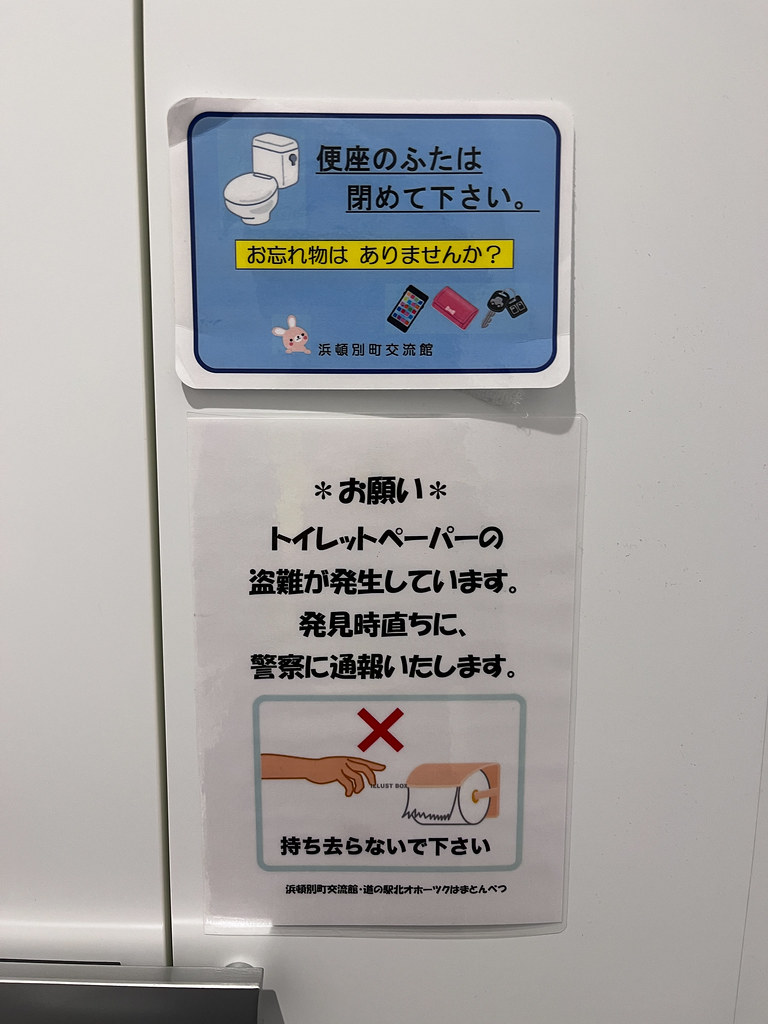
    Another peculiarity about Japanese people’s obsession with cleanliness is that in most public toilets I have been to, signs are everywhere to teach users on how to flush the toilet. They require that in order to ‘prevent the spread of the germ’, the toilet lid be closed before flushing. And the toilet seat be disinfected using appropriate materials. I don’t understand how this way of flushing the toilet helps to prevent the spread of the germ. Can someone tell?

    Ride replay on Relive
  • Day 06: Pippu to Bifuka

    Date
    2022-10-17, Monday
    Distance
    91.36 km (336.16 km in total)

    Right now the sunrise in Japan is close to 6 am. At 4 pm the sun is setting and by 5:30 pm it becomes completely dark. We try as much as possible to get up early around 5:30 am but packing stuff really takes time. No matter how we try, the earliest time we start our daily cycle is 6:30 am. As the day gets shorter and shorter, we will have bigger and bigger chance to have to bike in the dark, which should be avoided.

    This morning in the park a group of elderly men playing gatebal asked what we were doing and where we came. This is the second interaction we have with random locals. I lament at that my Japanese is not good enough to carry the conversation forward. I would very much like to know what the main industry is in this town, what people do outside of works, what they think about their hometown, etc. Alas!

    I have been experiencing right knee pain since yesterday. A knee supporter was purchased in the hope to palliate my pain.

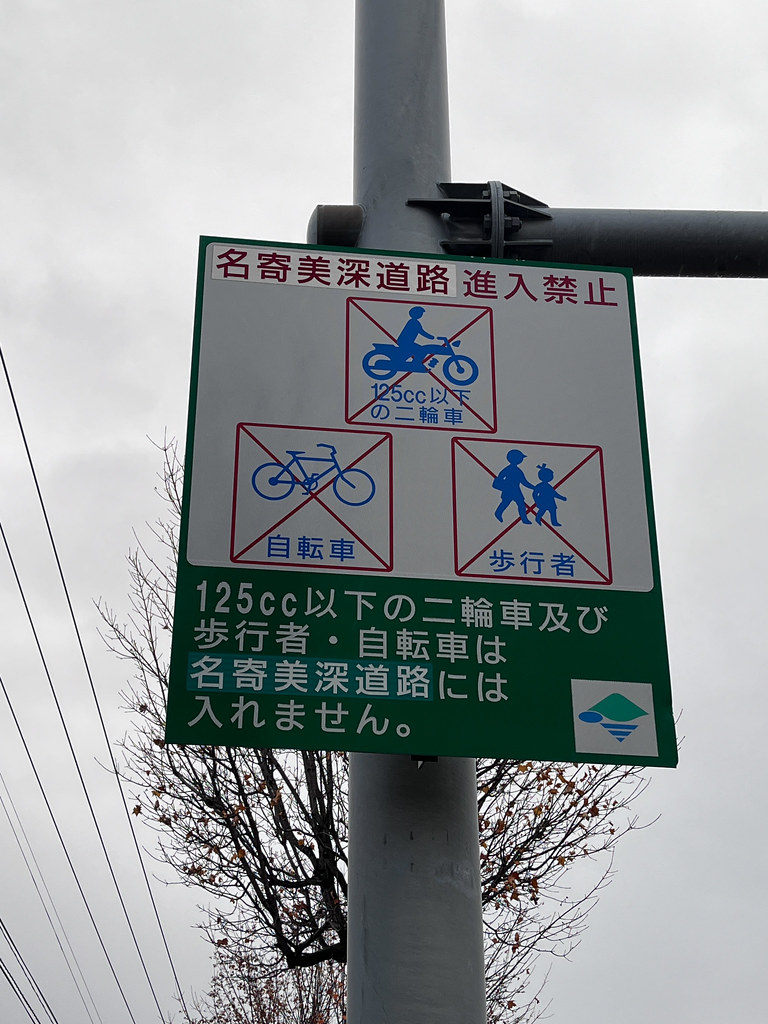
    We started our day by strolling around the area through secondary country roads. There was no shoulder but no traffic either. The ride feels like what I have always imagined for Hokkaido: tranquil and leisurely. However, the GPS led us to take unpaved roads that were horrible to cycle through, thus we choose to stay on a bigger road, National Road 40. As a city child, I grew up being used to biking alongside cars. It’s been almost a week that I came to Japan; I find myself often preferring to bike on the road despite the heavier traffic because the sidewalk’s condition is not always very good. Sometimes it’s too narrow, often there are a lot of cracks and bumps that make the ride not so smooth (and my eyeglasses jumping up and down), and sometimes there can be one-metre tall dense vegetation growing in between the fissures. Overall, the road tends to offer a more pleasant cycling experience.

    Japan is very clean. Everywhere. The government really make tremendous effort at preventing birds from attacking the garbage. Household garbage needs to be deposited in a close metal bin near the sidewalk, and there is virtually no garbage bin in the public space. Most of government-ran facilities ask visitors to bring garbage back. From the local’s point of view, this may cause little trouble, but for foreign visitors such as us, this is utterly inconvenient. We sometime have to bike 20 km with our garbage to discard it at a convenience store.

    On the roadside, every now and then we can see a statues of bodhisattva (a person on the way towards enlightenment / Buddhahood; more or less equivalent to a saint in Christianity) to whom people pray for road safety. Some of them even got dressed up and were offered food, drink, and money — very kawaii.

    Today the rain kept going on and off; there was storm alarm in the area. After cooking the lunch in Tsukumo Suigo Park in Shibetsu, the rain became steadier and heavier. Our waterproof gears kept us dry and warm. Rainy weather is perfect for something spicy — so we made Shin Ramyun! (Most Japanese instant noodles are miso or soy sauce-based, but today we wanted heat.) We added canned venison and cheese to make a deeply satisfying meal.

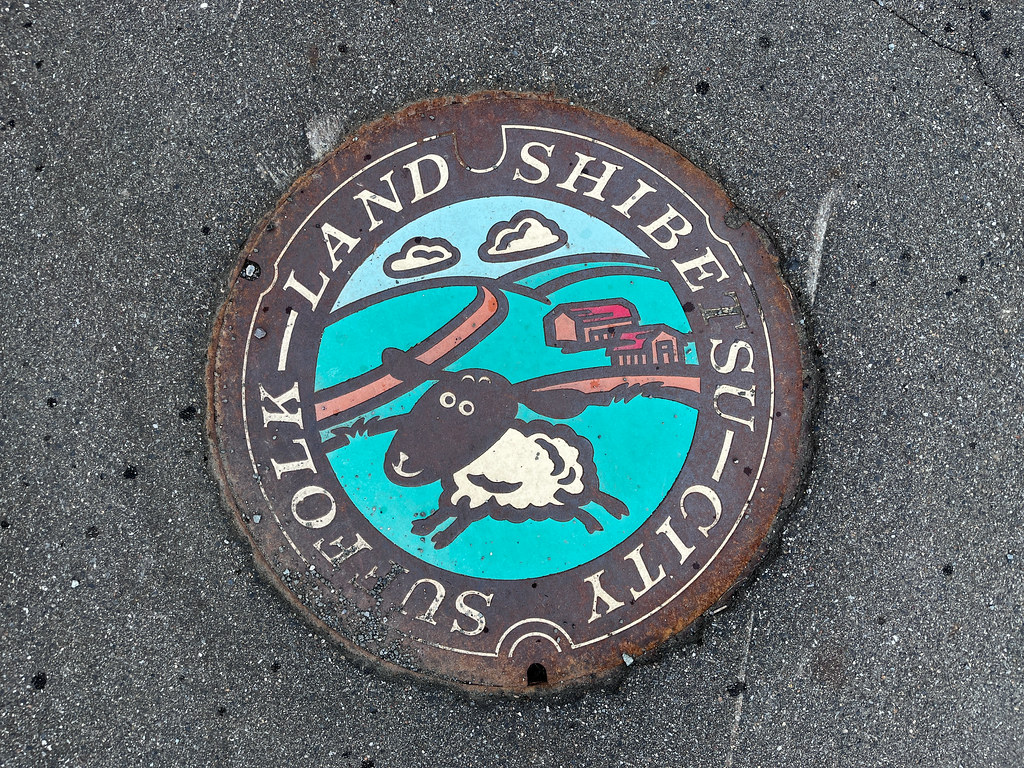
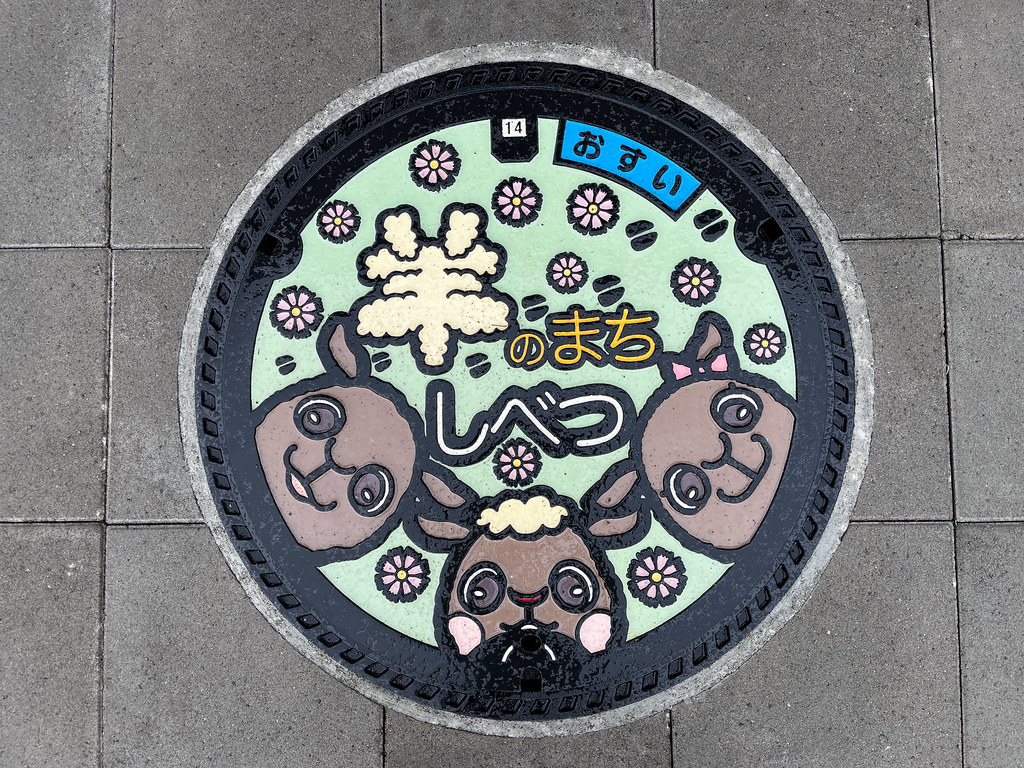
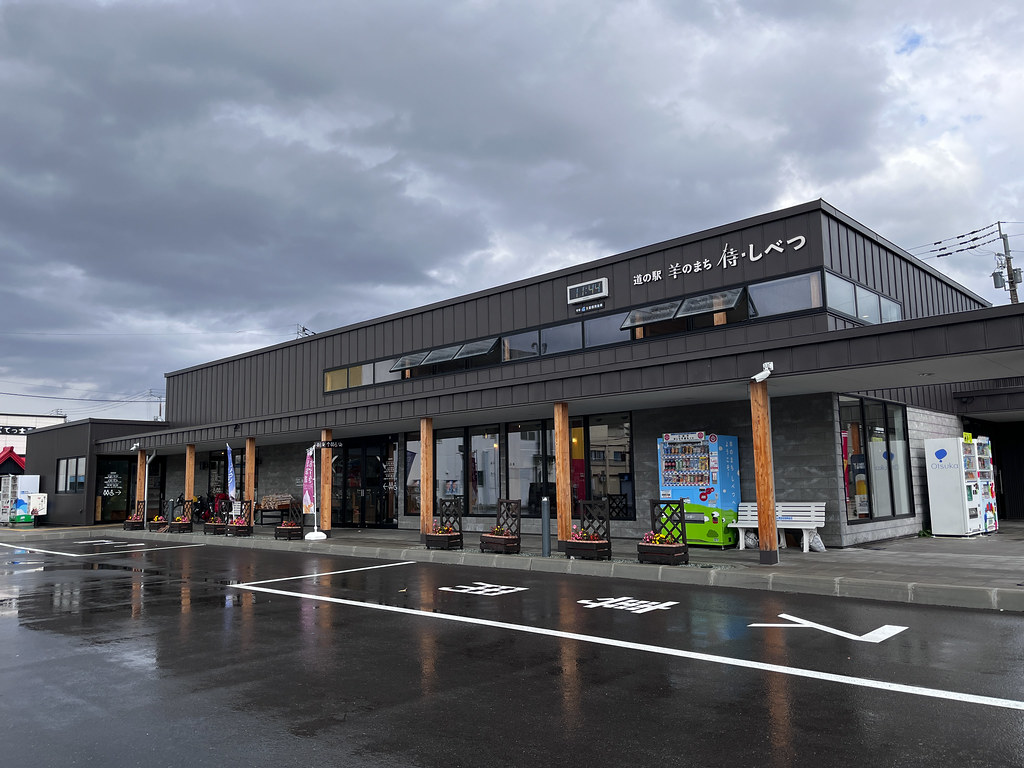
    The roadside station in the ‘sheep town’ Shibetsu deserves a special mention: it offers free charging that no other station offers. I was so grateful that I bought a locally made souvenir as a gift for my younger sister.

    Today is our first time biking after the sunset as we tried to reach hotel located in a small town called Bifuka. The experience would have been more pleasant had there not been a huge hill of 7-8% of incline for 2 km. Luckily, there was not many traffic; we were able to stop by the roadside whenever we needed a rest. Thankfully to my friend who oversaw that the rain wouldn't let up and that we would need to charge everything and dry our gear — we had a warm and dry place to spend the night.

    We appeared to be the only visitors who arrived at this traditional Japanese inn by bike, and perhaps one of the rarest foreigners they have ever received. This hotel seems to welcome mostly Japanese people on a business trip, so people don’t speak very much English here.

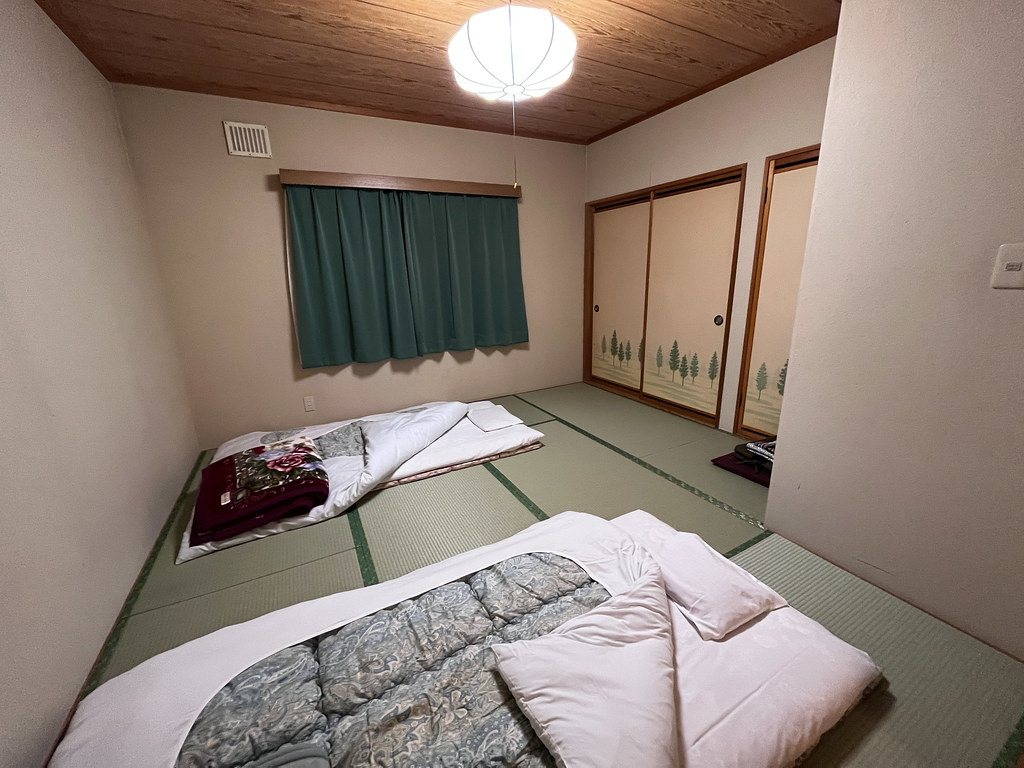
    Japanese like to compartment things. Our hotel is built in the traditional Japanese style furnished with tatami and separated by doors into a living room, a bedroom, a toilet and a bathroom. Open space doesn’t seem to be a common Japanese style. The dinner, also in the Japanese style, is exquisitely arranged into many plates. I wonder why they should like to keep food in so many compartments — aren’t there many dishes to wash? People here are really obsessed with cleanness. We must switch to indoor slippers when entering the dinning room. The staff would put your shoes beautifully lined up in the right orientation if you leave them in disorder.

    On a side note, this afternoon I accidentally collided with my friend and fell from my bike. Although nothing appears wrong at the moment, this will have consequence in days to come ……

    Ride replay on Relive
  • Day 05: Biei to Pippu

    Date
    2022-10-16, Sunday
    Distance
    62.87 km (244.8 km in total)

    In the morning when we were packing our stuff, a Japanese couple said hello to us. Later the man spoke to us, making himself the first random person to interact with us in Japan. Though the chat was short, we felt being welcome.

    The ride to Aoi Pond is an easy one on dedicated bike path. This attraction truly lived up to the hype. The water of the pond, like the name suggests, is of blueish turquoise colour. It appears to be a popular shooting location: one lady even brought her rabbit as model to pose in front of the pond. If I had the luxury of time, I could easily spend an entire day watching the light and shadows dance across the surface of the lake. But the road calls — we had to keep pushing north!

    Nevertheless, we still dropped by the nearby Shirogane Dam (四季彩湖) which is actually closed for visitor, but we ignored the sign and ran into two locals who also broke the rules by going, discreetly they said, for fishing in the area. The old man told us to watch out for bears and showed us his alarm that produced very loud noise that he used to scare wild animals away. This is not discreet at all!

    On our way passing by the town centre of Biei, we visited the Biei Shrine. I purchased their shuincho (御朱印帳) to start collecting the seal stamps given to visitors that meant to be a special kind of prayer. A shuin is composed of a large red-inked stamp and a calligraphic writing that says the name of the temple/shrine and the date of the visit, together with other markings distinct to each shrine/temple. It’s a very beautiful tradition.

    After a few days of bad experience of passing through unpaved segments suggested by both Komoot and Google Map, we learned to stick on the main roads that are guaranteed to be paved. The traffic is heavier, however the majority of these roads have, strangely, paved ‘sidewalk’ that are wide enough for cycling. When there is no such sidewalk, we would bike on the side of the road with caution.

    In the afternoon, near Asahikawa, we ran into Chou (周俊廷), the Taiwanese guy whom my friend met in the airport and who also set to cycle across Japan starting on the same day as us. Contrary to us, he was able to book a flight to Wakkanai to start his journey southward, whereas we struggled to make our way to the northernmost point of Hokkaido. This is his second time cycling across Japan in order to visit the 100 or so castles of Japan. He claimed to receive many encouragements thanks to his gigantic poster fixed at the back of his bike that stated: ‘A Taiwanese biking across Japan, from Wakkanai to Okinawa’. Drivers would make a little melody to cheer him up and people would come to offer him food and drink. This makes me very envious as I too want to interact with the locals. Time to upgrade my Canadian flag!

    Today I also learned that Hokkaido farmers still burn the remains of the crop to fertilise the soil, so sometime the air smells smoke. This is an old method of farming; so am not sure if it’s environmentally friendly — any thought?

    To pass the night, we found a discreet spot in the park in a small town beyond Asahikawa called Pippu. I was constantly afraid of being noticed and then kicked out of our tent, whereas my friend was much more composed. She even went for a bath in the public bath while I was falling asleep in the tent. I woke up at midnight, and toured around the town to find a public toilet. To my surprise, the toilet is an old-styled squat toilet, not a sitting toilet with electronic bidet that I have encountered mostly in public setting in Japan. This is really a small town that lacks the budget!

    The full take — 31 more photographs from this day
    IMG_1364 IMG_E1366 DSC_3630-HDR DSC_3643 DSC_3647 DSC_3652 DSC_3670 DSC_3688 IMG_E1376 IMG_E1379 IMG_1381-Edit DSC_3691 DSC_3695 DSC_3696 DSC_3699 DSC_3701 DSC_3702 DSC_3703-HDR DSC_3708 DSC_3710 IMG_1391 IMG_E1393 IMG_1394 IMG_1398 489877837_24168415532745380_8752906107520325396_n IMG_1402 DSC_3711 DSC_3716 DSC_3734 IMG_E1405 IMG_E1406
    Ride replay on Relive