LINDA’S ARTWORLD

A collection of Linda’s artworks, designs, humanitarian projects and publications where light, space, and mathematical precision intersect.

Tag: Northern Honshū

Aomori down to Nikkō — Days 31–44 of the 2022 tour.

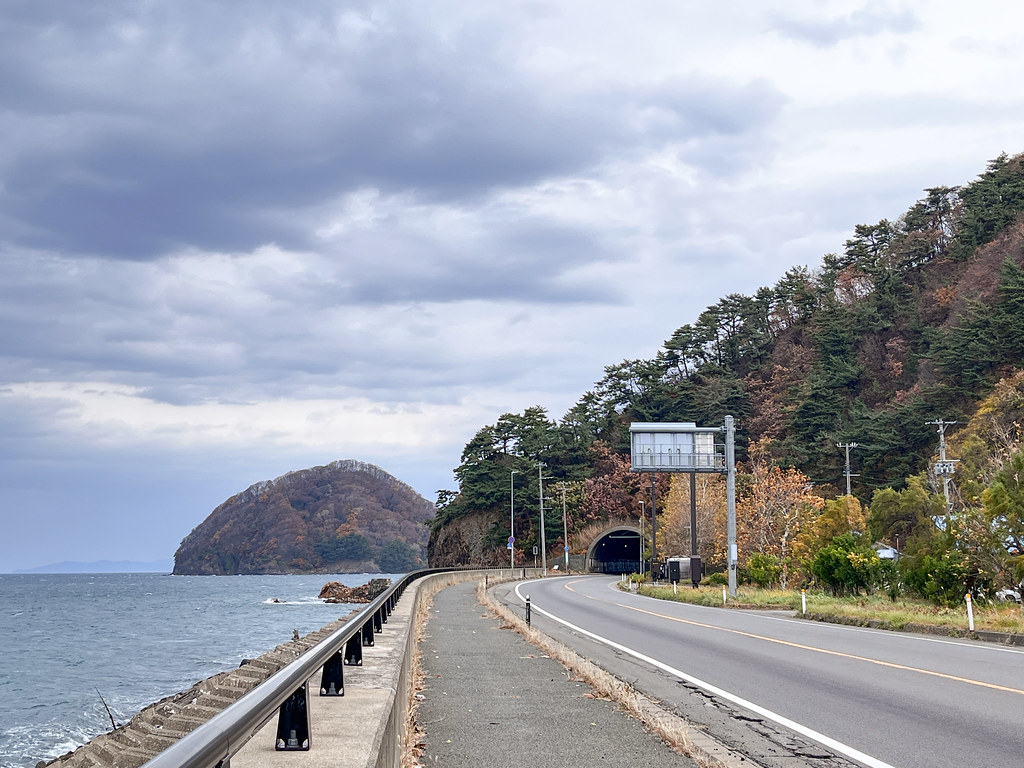
  • Day 34: Shichinohe to Numakunai

    Date
    2022-11-14, Monday
    Distance
    84.01 km (2005.51 km in total)

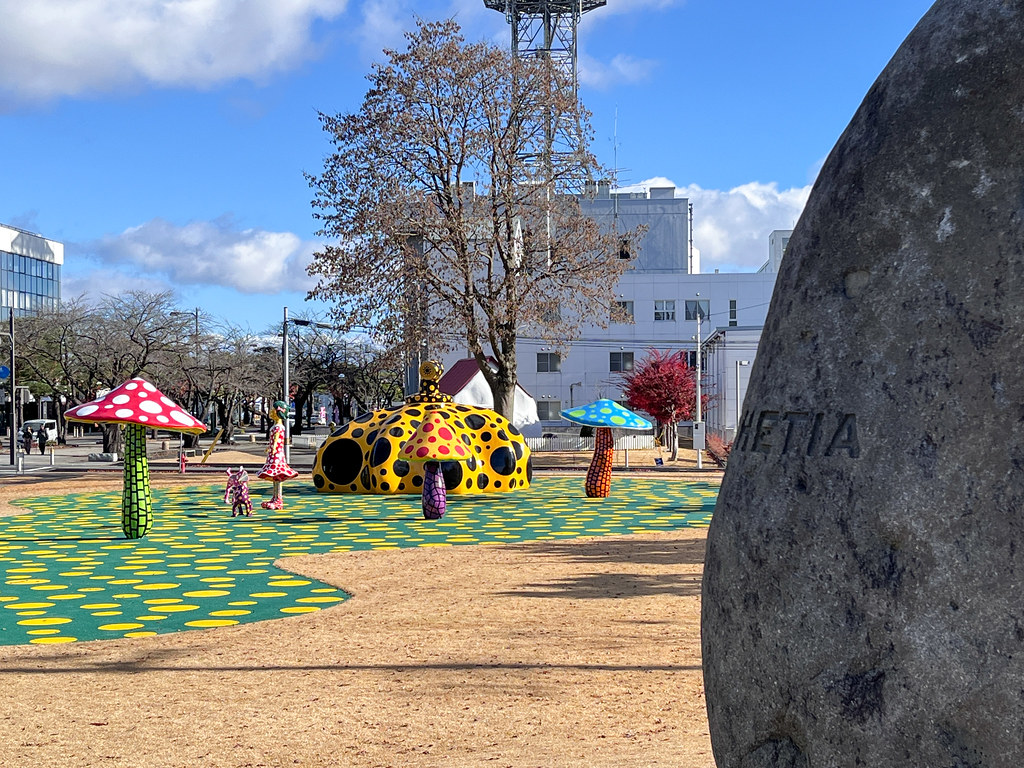
    This morning we dropped by an interesting town called Towada on our way to the next destination. Formerly a ‘horse’s town’ (駒の里), this place displays a lot of things related to horses in the public, including dutch cover, sculpture, etc. The main attraction in Towada for both of us is without a doubt the museum of modern arts, which we were unable to visit (we were there too early) but which offers a fair amount of outdoor installations such as Yayoi Kusama (草間彌生)’s artworks filled with her iconic polka dots to view.

    We also took the opportunity to purchase at a very affordable price from a local orchardist some apples for which Aomori is famous — there is a saying that everything in Japan is small, except apples. I am not exaggerating in pointing out that Aomori people are really proud and fond of their physically magnificent apples. Apple shape is used everywhere the general public goes. Signs, fences, roadside attraction, advertisements, to name but a few.
    A lady who spoke little English stopped us by the side of the road while we were heading to Numakunai to meet our very first Warmshowers host via National Road 4. We were expecting a brief conversation about our journey, yet this encounter would later became long and bizarre. She asked us the purpose of our biking across Japan — a question I actually like to think about — then told us to read a Buddhist classic if we should feel anxious on the road. At that point, I thought she was akin to those good-faith Christians who had helped me biking across Canada, I gave her my social media account without any thought of caution — this, in the following days, proved to be a rather problematic course of action …

    After the dark, while biking in a desolate area that offered nothing but trees, my friend had a puncture on her rear wheel. 2 policemen came to make sure that we could handle the situation and one gentleman stopped briefly to offer help even though he had no suitable tools. Changing tube was not a difficult task, however, when my friend was adjusting the gear back (by pedalling), the derailleur accidentally got entangled into the spoke and bent out of shape. As this problem was not solvable by ourselves and there was no bike shop nearby, we had no choice but to call our host William for help.

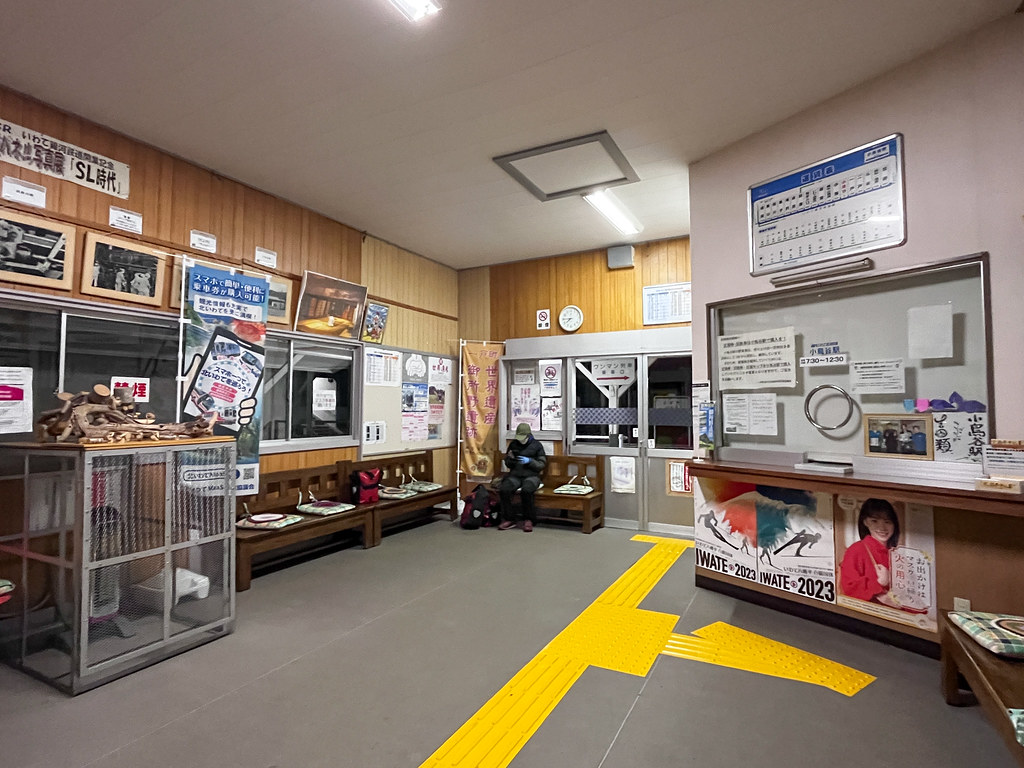
    Originally, I was thinking that William could call someone who offers pick up service with a truck, but he went above and beyond my expectation to get us out of this misery. First he drove (a sedan) some 20-30 minutes to bring us to the nearest station to take the train to his town (the local railway is called いわて銀河鉄道 (lit. 'Iwate Galaxy Express') with a clear literary reference to Kenji Miyazawa (宮沢賢治)’s children classic Night on the Galactic Railroad). Second, he went back to the meet-up location to bring our two bikes home. Third, he came to Numakunai train station to give us a lift to his small but cozy home. After a long day at work, he was more than willing to spend so much time on two strangers whom he had never met — this really surprised us, especially my friend who had never experienced Warmshowers hospitality.

    Needless to say, we were warmly welcomed by William and Pauline at their dwelling, which was built in the traditional Japanese style. The living room, which doubles as a guest room, is tiled with tatami on the floor and equipped with a kotatsu, Japanese-styled table with a heater and a blanket. At the bed time, the kotatsu would be moved to the side, and the space being used for putting the futon mattress on which we would sleep. The toilet and the bathroom are separate; the latter is a waterproofed room with a shower area outside of the bathtub and on the same level as the floor. This type of bathroom gets totally wet after a shower so a dry space, separated by a door, is needed to keep cloth and towel dry. In William and Pauline’s case, this dry room also serves as the laundromat. We are pleasantly amazed by Japanese people’s effective usage of the physical space, however small it is.

    William is a British citizen of Hong Kong descent who came to Japan to teach English about 10 years ago before starting to learn Japanese. He got into the habit of bicycle touring while working. Although he had no time to conduct month-long bike tour, he has made, mainly in the summer, short trips to Taiwan and many parts of Japan. Pauline, on the other hand, has had no touring experience so far but would love to try it one day. The dinner time was filled with laughters and chatters about our touring stories and the amazing hospitality we had experienced.

    Today is a day full of all sorts of surprises. Tomorrow we will walk to the nearest bike shop to get my friend’s bike fixed. We are grateful that the world has not turned against us even though chance has.

    Ride replay on Relive
  • Day 33: Aomori to Shichinohe

    Date
    2022-11-13, Sunday
    Distance
    66.77 km (1921.5 km in total)

    For our first cycling day in Honshu, we encounter a problem: unlike in Hokkaido, Google Map no longer provides cycling route; we have to set it to driving or walking. While in driving mode, options are given to avoid toll and express highway, in walking mode Google doesn’t allow customisation, so often than not, to avoid stairs or overpass we use the driving mode. Komoot which works wonderfully in Europe for bicycle touring has difficulty recognising Japanese street and location names. Using it requires an extra step of keying in the coordinates Google gives us, which is inconvenient. We use it mostly for consulting the elevation profile.

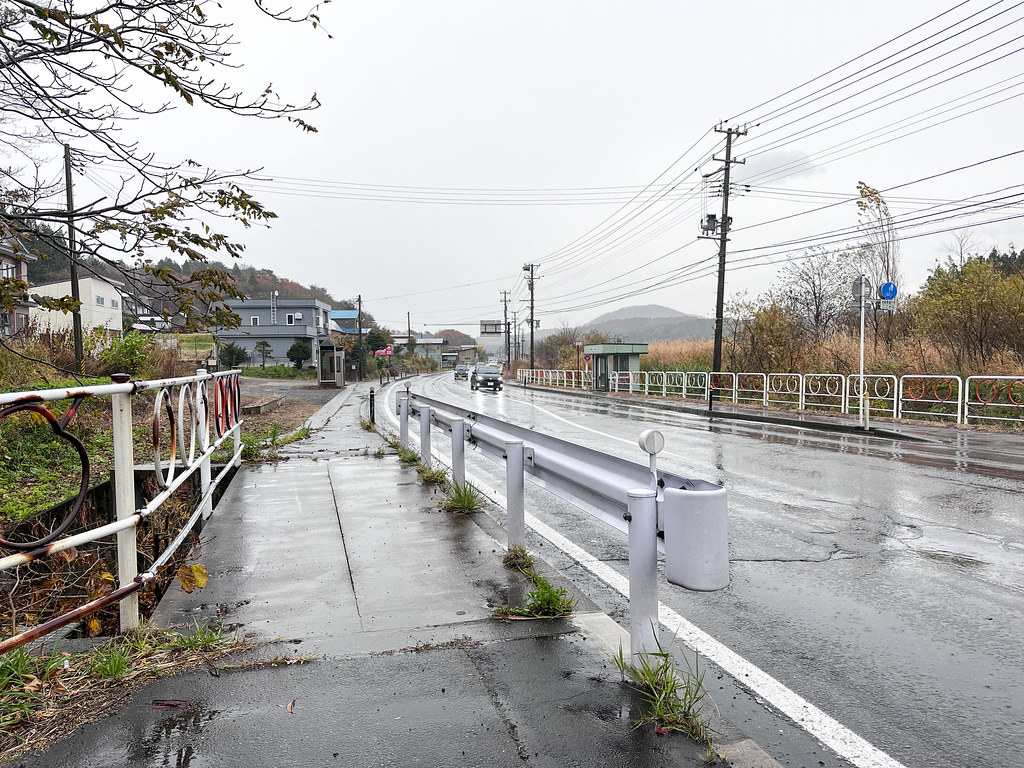
    From Aomori there are several secondary roads to choose, but for convenience’s sake, we opted to cycle on the primary road, National Road 4, which is not the ideal cycle way but is the most straightforward and easiest to navigate. We were told that some stretches of this road was unsuitable for cycling, and indeed, it got as busy as it could be, but most of the time there was a wide paved sidewalk separated from the driveway, so we didn’t feel too stressful the whole time we stood on it.

    For a number of short stretches that had no sidewalk nor shoulder, we were ‘lucky’ to ride through them under a virtually car-free circumstance. The reason is rather unfortunate: probably due to the heavy rain that started soon after noon, a pin tree fell, suspending half way in the air and entangling in a complex aggregation of power lines on the side of the road. The situation seemed to be so urgent that policemen, firefighters and ambulancemen were all presented. The road was closed to traffic on both ways for at least 2 hours. We were the only two individuals being given the permission to escape the gridlock slowly from the side; poor car drivers could only line up in a long line extending a few kilometres, waiting for the professionals to figure out a solution.

    Thus, we were able to bike on this national road that connects the northern end of Honshu and the capital with very light traffic. There were only a few car drivers, impatient in waiting endlessly, who passed us at slow speed. I was nevertheless amazed at how civilised Japanese drivers are, as no one hones while waiting in line or driving behind us.

    After the sunset, we arrived at the roadside station in Shichinohe and called it home for tonight.

    This roadside station was surprisingly spacious. It had separate buildings for the rest station, plus a gas station, large supermarket, and even a convenience store nearby. The public space had tables, sinks, and a coffee vending machine that brewed fresh cups — what a great spot! We set up our tent under the semi-covered walkway, our favourite kind of place for shelter from the wind and rain.

    Ride replay on Relive
  • Day 32: Aomori

    Date
    2022-11-12, Saturday
    Distance
    0 km biked (1854.73 km in total)

    We scheduled a rest day to visit the writer Osamu Dazai (太宰治, 1909 – 1948)’s birthplace in the northern end of the city of Goshogawara. To get to the other side of the prefecture, we took the JR train to Goshogawara station, thence transferred via a local train (津軽鉄道線, Tsugaru Railway) to Kanagi.

    The whole trip that took about 1.5 hour was quite a nice experience for a first-timer: the train was not too crowded and the ride smooth. It was just a bit confusing when we had to purchase our tickets for the local train. The booth was so well hidden and there was so few people that we found it at the last 3 minutes.

    The scope of Tsugaru Railway is much smaller than JR’s: the vehicle much older and there were only a handful of passengers on board. However, this appears to be a railway of historical significance, as the whole ride was accompanied by a personnel telling us the history of the area we were passing through. This kind of service that helps to grow an intimate bond between the railway and the passengers wouldn’t be available on the nationally-run JR.

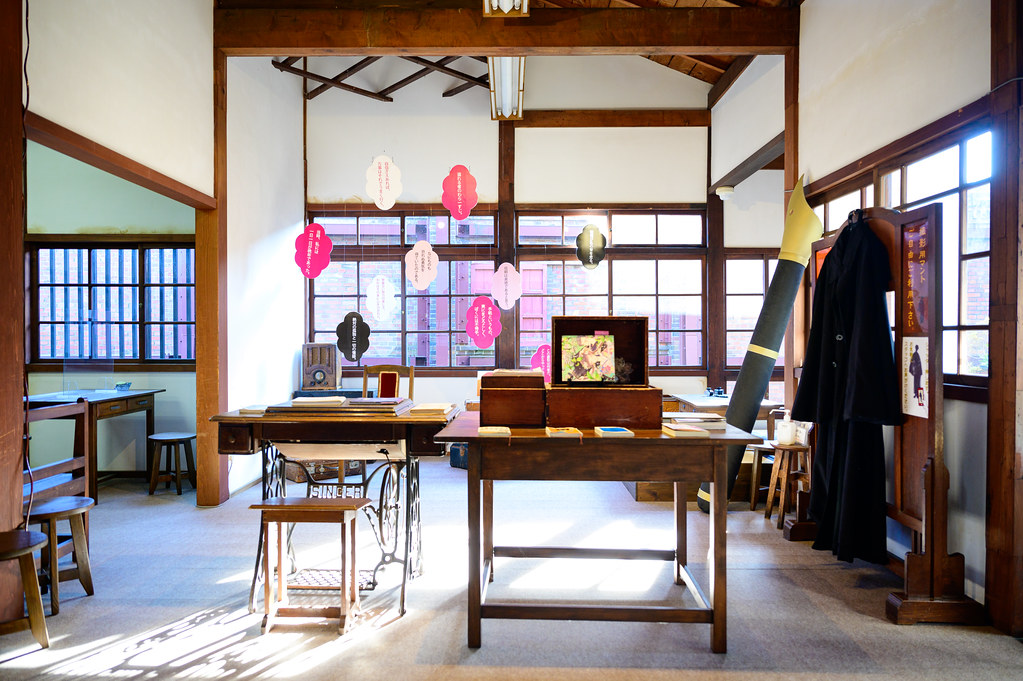
    The town in which Dazai was born and raised was almost devoid of any sign of human activity, barren at the Osamu Dazai Memorial Hall “Shayokan” that received the majority of out-of-town visitors. Most of buildings were closed, there was hardly anyone or any vehicle on the street. It was hard for me to believe that someone coming from a wealthy background such as Dazai grew up in this quiet town remote from political centre. However, catching sight of the residence his father commissioned to build dispelled any of my lingering doubt.

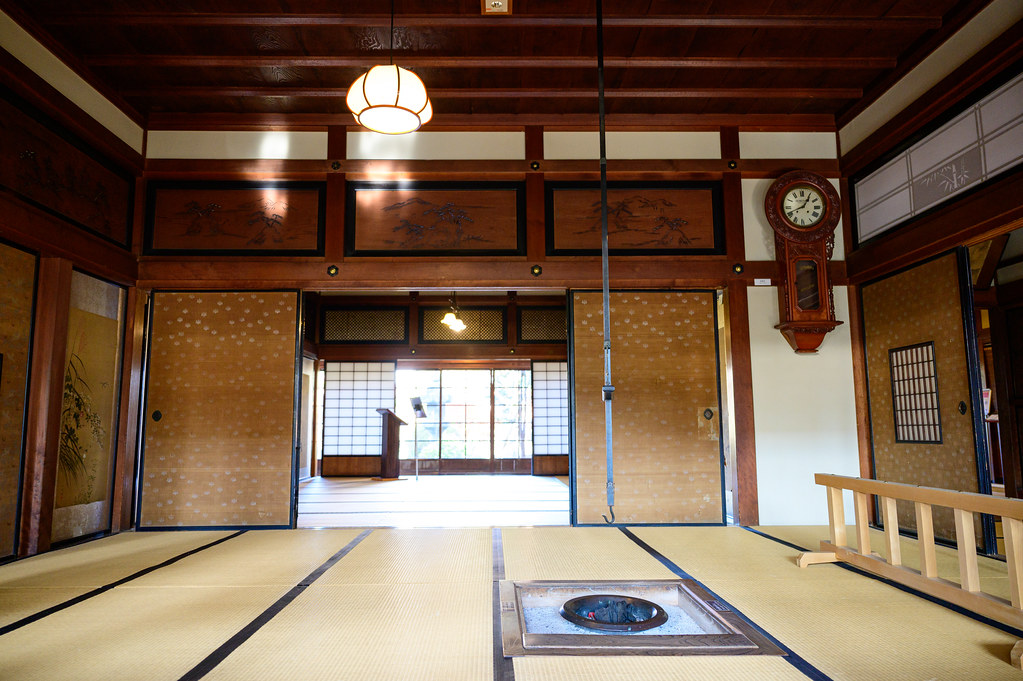
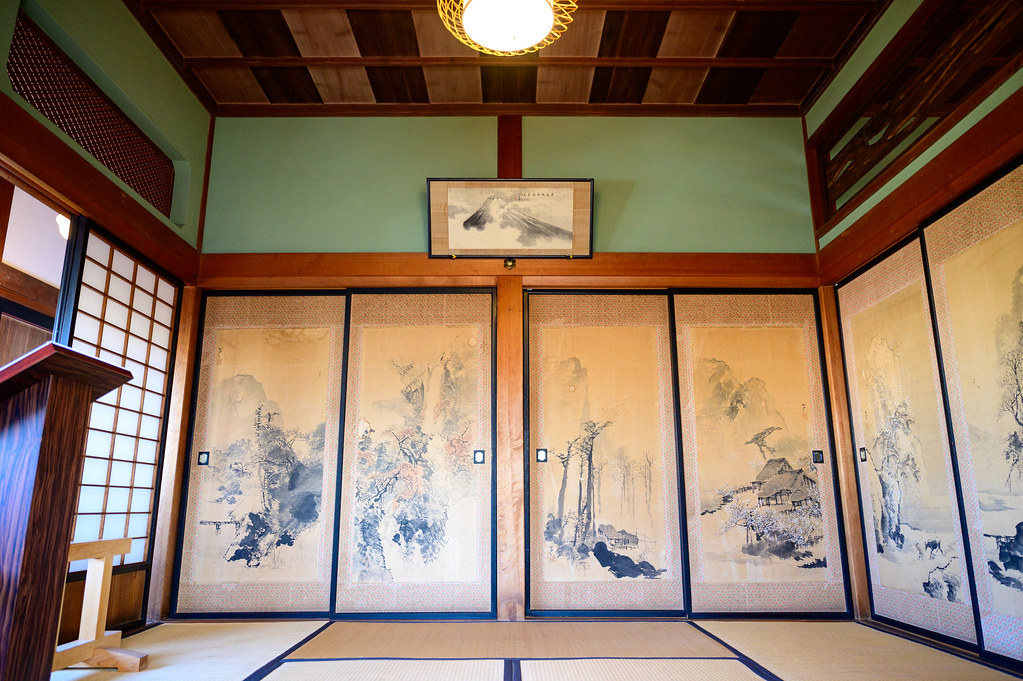
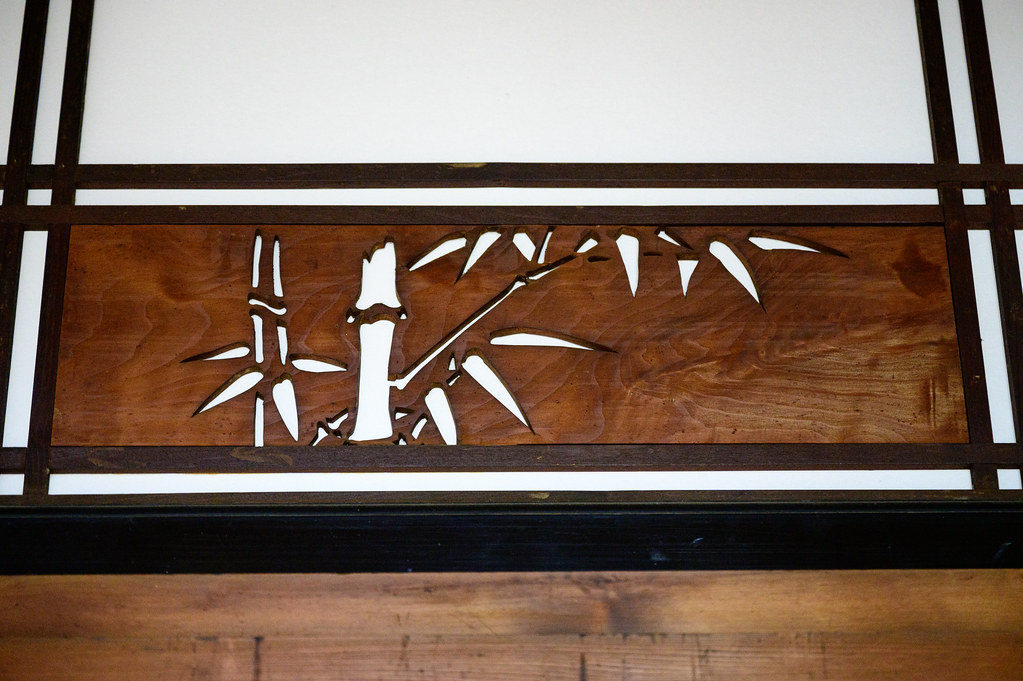
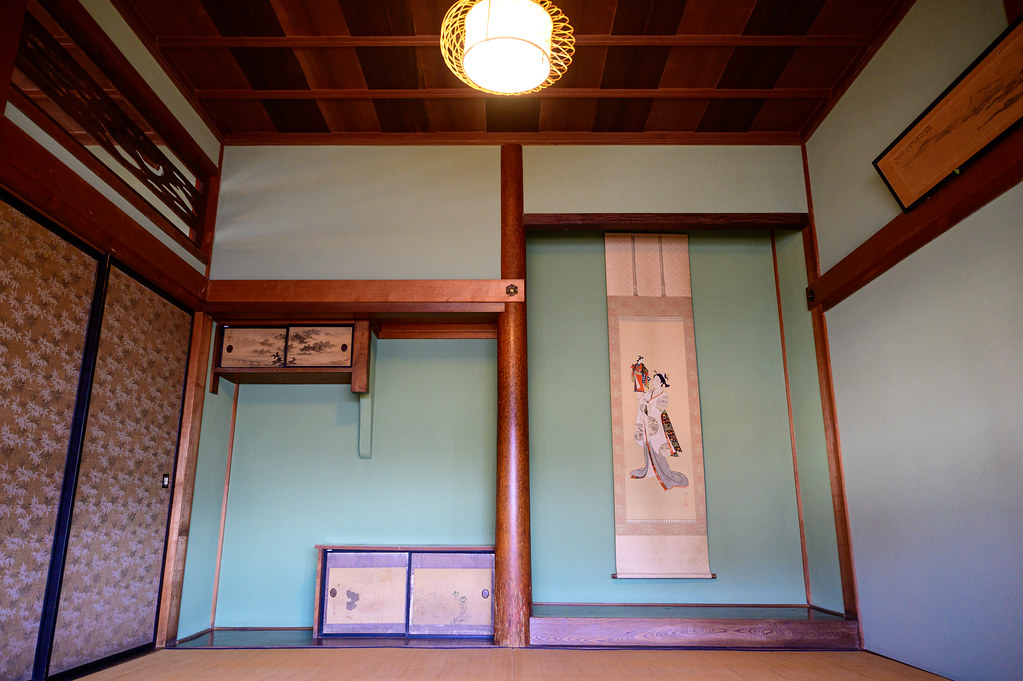
    In one word, the house is truly: sumptuous. It’s built mostly in the traditional Japanese style with a small touch of Westernness. Spacious and bright, the regional residence of a national politician who needed to make frequent visits to and long term stay in Tokyo was designed to receive visitors from the high society. Dazai was born into a world in which everyone believed he must has possessed everything he wanted yet in reality he had nothing but a sense of estrangement, which was so strong that he should say: ‘I am sorry I was born’.

    I can now sympathise more with Dazai’s troubled soul, his emotional crisis and anxiety about life, which are so poignantly expressed in his novel No Longer Human (人間失格, 1948). A piece of decadence par excellent, it’s the most gloomy and despairing story I have ever read (even more so than Camus’ The Stranger). I can still recall my first encounter with this work. On one fine evening in June in my youth, wanting to read something that was not too long, I picked up this small book that had been sitting on my shelf for long. A mere first few pages full of expressions of ennui were sufficient for me to wonder who this troubled soul was who should write such despairing things. Then I started to read the author’s biography on the cover and not surprisingly found out that Dazai died by suicide at the fifth attempt. And the day he finally succeeded in taking his life is — guess what — the very same day I picked up No Longer Human. I can’t say to enjoy his writing so much, but it certainly made a strong impression on me.

    We also visited the Tsugaru Shamisen Hall next door dedicated to the type of shamisen originating from Tsugaru Peninsula. It offers a live performance played by the professional dressed in traditional way and a small exhibition that consists of visual and auditory items to show the details of this three-stringed instrument. My favourite part is the section showcasing various string instruments around the world together with their sound samples.

    We got back to our hotel in Aomori City and found out that someone has left a written encouragement in my helmet. It really is encouraging to receive such message from stranger.

    The full take — 97 more photographs from this day
    IMG_3521 IMG_3522 IMG_3523 IMG_3525 IMG_3528 IMG_3584 IMG_3585 IMG_3586 IMG_3590 IMG_3592 IMG_3593 IMG_3594 IMG_3596 DSC_5551 DSC_5552 DSC_5553 DSC_5558 DSC_5559 DSC_5560 DSC_5561 DSC_5565 DSC_5566 DSC_5567 DSC_5569 DSC_5577 DSC_5578 DSC_5579 DSC_5580 DSC_5587 DSC_5591 DSC_5592 DSC_5593 DSC_5595 DSC_5596 DSC_5598 DSC_5599 DSC_5601 DSC_5602 DSC_5603 DSC_5604 DSC_5607 DSC_5608 DSC_5609 DSC_5611 DSC_5614 DSC_5615 DSC_5616 DSC_5619 DSC_5622 DSC_5623 DSC_5625-Pano-Edit DSC_5626 DSC_5632 DSC_5635 DSC_5639 DSC_5640 DSC_5642 DSC_5643 DSC_5644 DSC_5645 DSC_5655 DSC_5656 DSC_5657 DSC_5658 DSC_5662 DSC_5663 DSC_5664 DSC_5665 DSC_5667 DSC_5668 DSC_5669 DSC_5672 DSC_5677 DSC_5678 DSC_5679 DSC_5680-Enhanced-NR DSC_5683 DSC_5684 DSC_5685 DSC_5687-Pano-Edit-3 DSC_5695 DSC_5698 DSC_5700 DSC_5701-Enhanced-NR DSC_5708 DSC_5713 IMG_3614 IMG_3615 IMG_3617 IMG_3638 IMG_3639 IMG_3641 IMG_3647 IMG_3652 IMG_3663 IMG_3669 IMG_E3696
  • Day 31: Hakodate to Aomori

    Date
    2022-11-11, Friday
    Distance
    25.06 km (1854.71 km in total)

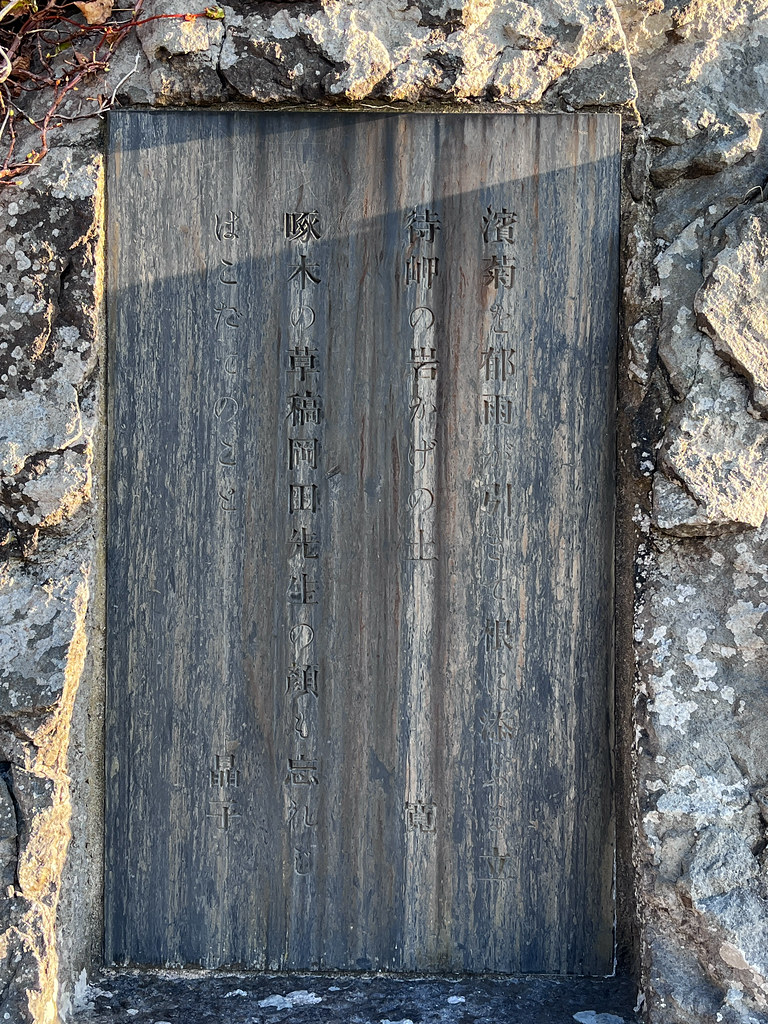
    I woke up early to bike to the harbour to photograph the sunrise and a few surrounding areas, including the premature poet Takuboku Ishikawa (石川啄木, 1886 – 1912)'s family tomb. Among a few passers-by who, seeing the poster on my bike, came to speak to me was a lady walking with her elderly Akita. At the end of a pleasant conversation (despite my poor Japanese), she invited me to have breakfast at her dwelling near the cliff by the Tsugaru Strait. I had to decline this rare opportunity to sit with a local at the table because my friend was waiting for me in the hotel. This is the inconvenience of travelling in a group; if I were alone, I would certainly accept the invitation.

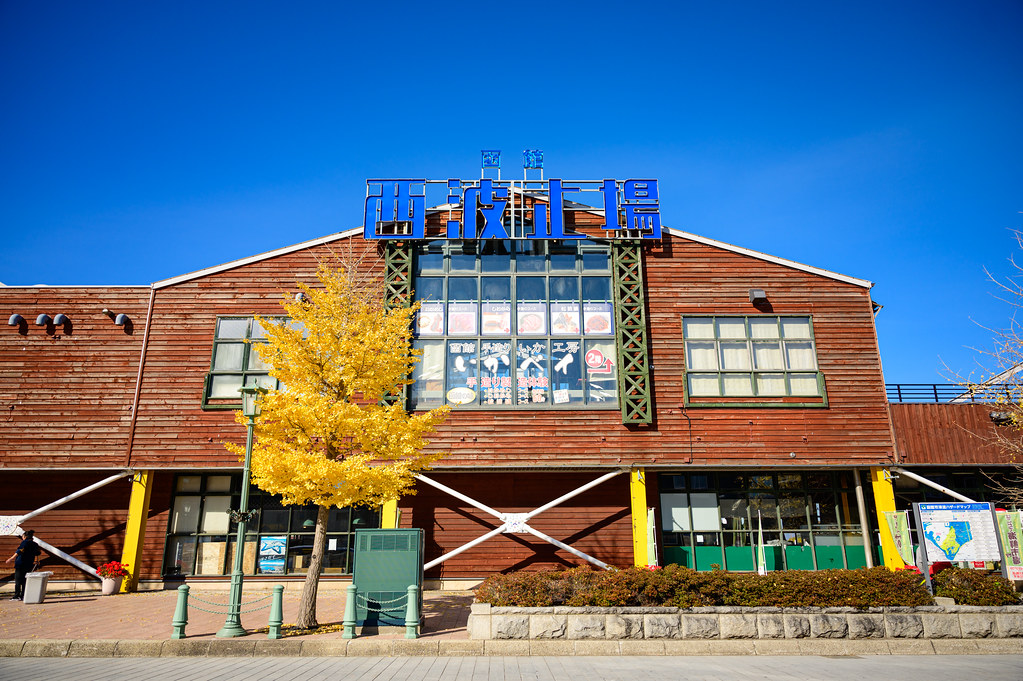
    Our ferry was scheduled at 5:30 pm, so we had plenty of time to visit Hakodate, one of the 3 first Japanese port cities that opened to foreign trade in 1859 (I possess stamps specifically commemorating the 150th anniversary of this result of the Kanagawa Treaty). In a hilly district where townhouses built in Western, semi-Western, and Japanese styles co-exist, stand several old foreign diplomatic establishments and Christian churches, including, most notably, a Russian Orthodox church and a Roman Catholic church (the first I have seen in Japan!). At the foothill of this Preservation District, a cluster of old-styled red-brick warehouses now host souvenir shops and other venues.

    The Orthodox church, apparently the most famous one of the entire group of Western-style architectures of the Meiji era, was unfortunately under restoration; the whole building was veiled. The Roman Catholic church, founded in 1859 by a French priest during the time when Catholicisim was banished, was open to visitors but photography of the interior was forbidden. There was no one monitoring inside this gothic-style structure built in 1924; it's up to each visitor's good conscience to observe this strange rule — strange, in that I have never been to a church in the West that is freely open to the public but where photography is forbidden, even outside of service periods. I wonder what may be the reason behind this decision.

    Outside of the churches, we met a lady who, originally from Kansai area, now lives and works as a farmer in Hokkaido.The farming community has always need of workforce, so despite her young age, she is able to integrate into the community. Farmers in northern Japan usually find a secondary job during the austere winter months such as working in a hotel when tourists come for skiing. This lady seems to have a keen eye for natural beauty residing in what appears to be insignificant things. I saw her photographing leaves from an interesting angle. I wish to get to know her better.

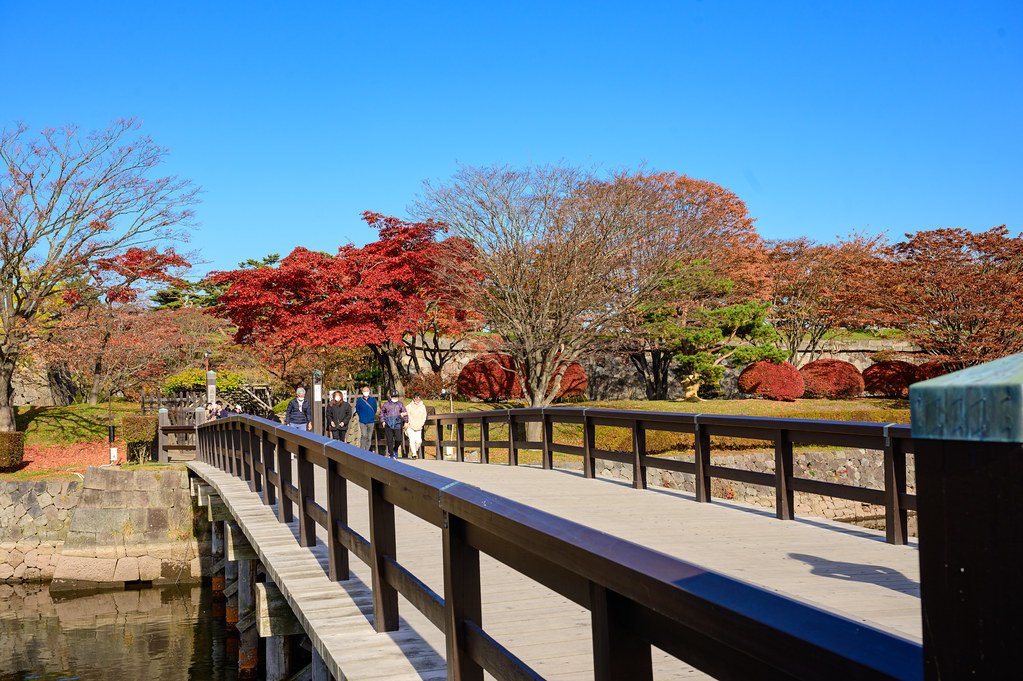
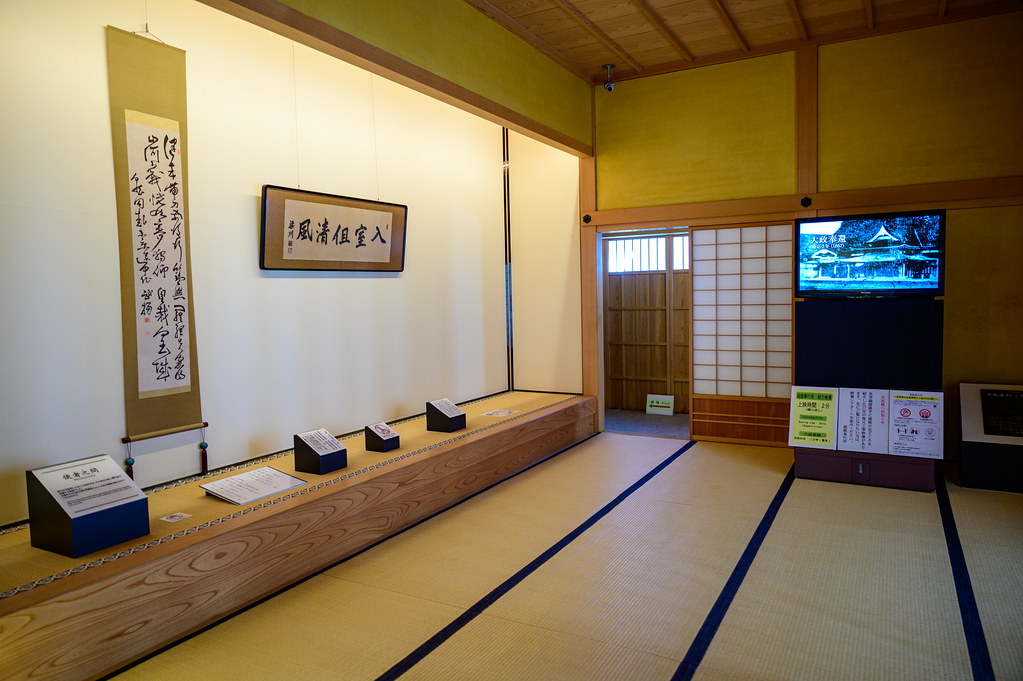
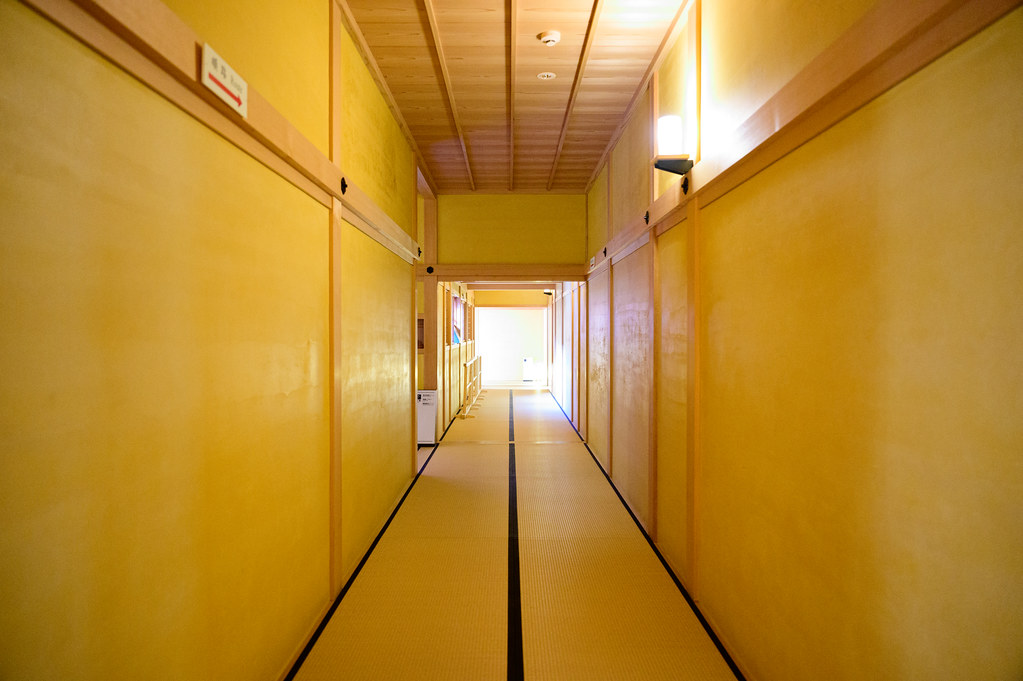
    We also went to visit the Goryokaku (五稜郭, literally, 'five-point fort'), a star-shaped fortress designed during the Tokugawa Shogunate and modelled after medieval European fortified cities. Inside the fort, the traditional Japanese-styled building that used to host the Hakodate Magistrate's Office has been entirely renovated (or they say, 'restored to its original state'). The architecture is gorgeous but everything is too polished and smells too new to me. There is not a shred of that distinct scent of old wooden buildings that I like.

    We specially prepared 1 hour to go to a moderate-size post office to mail some stuff back home. Of the 4 personnels present, 3 came to gather in front of us after we expressed our desire to mail a parcel overseas. We have an international parcel! (WOW! How did they find our tiny post office hidden within a residential area?) Can Japanese sake be shipped aboard? (Yes, if it's alcohol content is under 24%.) What's ema that you indicated on the list of shipped goods? (It's 絵馬, I pronounced in Japanese). They treated our request as the biggest challenge they have faced in months with an incredibly high level of seriousness. After the first person had checked our declaration, a second person came to double check every entry o-n-e b-y o-n-e. And as if this is not enough, after the second person was done, a third person came to triple check to finalise our shipment. Oh my God, it's always a big event to ship a parcel outside of Japan.

    At 4:45 pm, I boarded the ferry with a mixture of excitement and melancholy. I feel that I have barely begun to know Hokkaido and its people and I am already leaving. Looking back now on my month-long sojourn on this island, one thing I lament is that I did not have as much interaction as I wished with the locals. We almost made a complete circle round Hokkaido, starting from Sapporo, thence Cape Soya and Cape Nosappu, and finally Hakodate. We started hanging up our posters announcing our cross-Japan bike tour at the northernmost point of Japan, yet it's only in the southern part that we got more and more encouragement from total strangers. In the cities more so than in the country. Nevertheless, I must speak in defence of Japanese people by pointing out that another Taiwanese cyclist Chou (周俊廷) who is currently biking from Wakanai to Okinawa has received locals' gestures of kindness since the very first day. Eliminating all factors that may contribute to this difference in acceptance of foreigners, I think travelling alone is the one that makes people more willing to approach him.

    The most frequently asked question to me when I conducted my two biggest solo bike tours across Canada and Europe is: 'Are you not lonely?' I am not, honestly, because I feel connected to the places I travelled through and the people I met. Strangely, I find myself more lonely when travelling with someone (whom I get along well) — because I don't feel that connexion. A (woman) touring cyclist once told me, when she travelled by herself, people came to speak to her all the time, but once she started travelling with someone, it never happened again. It seems that people — especially Japanese people who are trained not to mind others' business — have the tendency to 'leave a group of people alone'. My friend is the kind of person who doesn't care much of others' business, so she has adapted to this 'lonely' tour more than I did. This is the downside of touring in two.

    Anyways, by 9:15 pm, we finally landed in Aomori where we were supposed to be about a week ago. We will get proper rest in our hotel room before continuing our journey in Honshu.

    The full take — 72 more photographs from this day
    DSC_5371 DSC_5372 DSC_5376 DSC_5381 DSC_5382 DSC_5385 DSC_5388 DSC_5389 DSC_5392 DSC_5396 IMG_3432 IMG_3434 IMG_3435 DSC_5404 IMG_3436 DSC_5405 IMG_3438 IMG_3440-1 IMG_3441 IMG_3442 DSC_5409-Edit DSC_5413 DSC_5414 DSC_5416 DSC_5423 DSC_5429 DSC_5430 DSC_5445-Pano DSC_5446 IMG_E3454 DSC_5449 DSC_5451 DSC_5452 DSC_5456 DSC_5459 DSC_5461 DSC_5465 DSC_5466 DSC_5470 DSC_5472 DSC_5474 DSC_5475 DSC_5479 DSC_5481 DSC_5484 DSC_5487 DSC_5488 DSC_5491 DSC_5499 DSC_5501 DSC_5508 DSC_5510 DSC_5514 DSC_5515 DSC_5520 DSC_5521 DSC_5524 DSC_5529 DSC_5530 DSC_5531 DSC_5533 DSC_5534 DSC_5537 DSC_5540-HDR DSC_5546 DSC_5547 IMG_3461 IMG_3462 IMG_3464 IMG_3467 IMG_3469 IMG_3473
    Ride replay on Relive