- Date
- 2022-11-17, Thursday
- Distance
- 69.9 km (2169.22 km in total)


Last night, instead of camping, we slept on the couch inside the roadside station which offers heating. The disadvantages though, include that the light was always on, and that people — mostly truck drivers — came in every now and then to use the washroom. My friend is the type of sleeper who can be easily awaken by small noises, so she slept rather poorly in this kind of situation.
Before we embark, a middle-age man insisted on buying us food and drink in a nearby convenience store. When he saw us picking up only one item, he went on to pick up other stuff for us. 'You need more energy,' he said.


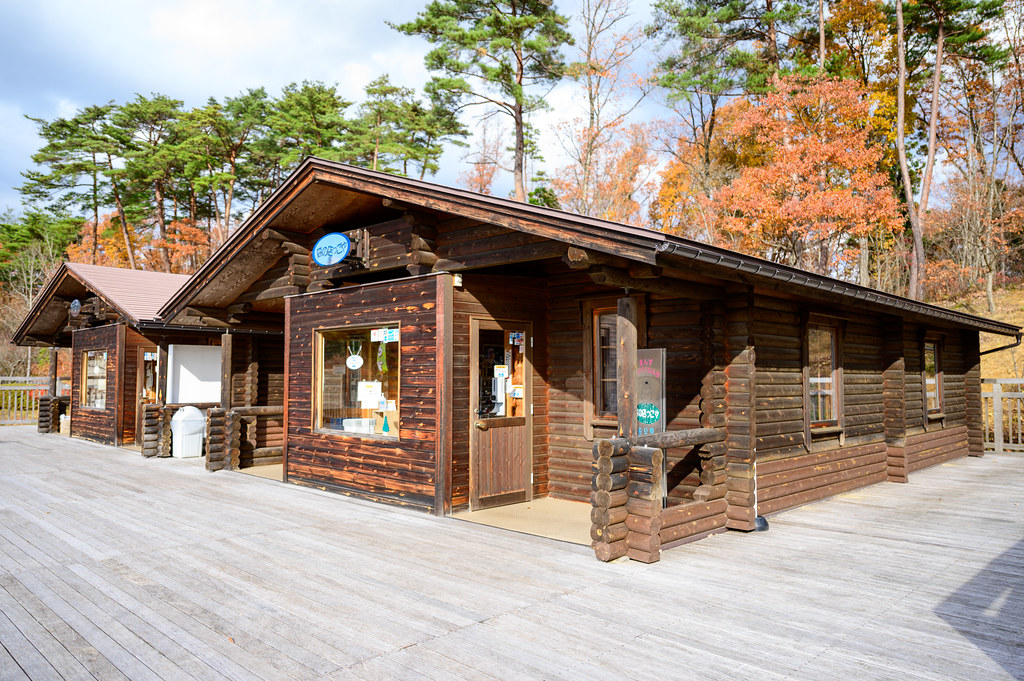


Kenji Miyazawa (宮沢賢治, 1896 – 1933) was born in the centre of today’s Hanamaki, but the museum and the fairy tale village built in honour of him were both located 5 km away on a steep hill for reasons unknown. Kenji Miyazawa’s birth house has been destroyed long ago. The residence that was subsequently built on the same site is now occupied by his relatives. Outside of it a commemorative plaque stands, next to which a bench was decorated with characters from Miyazawa’s novels.
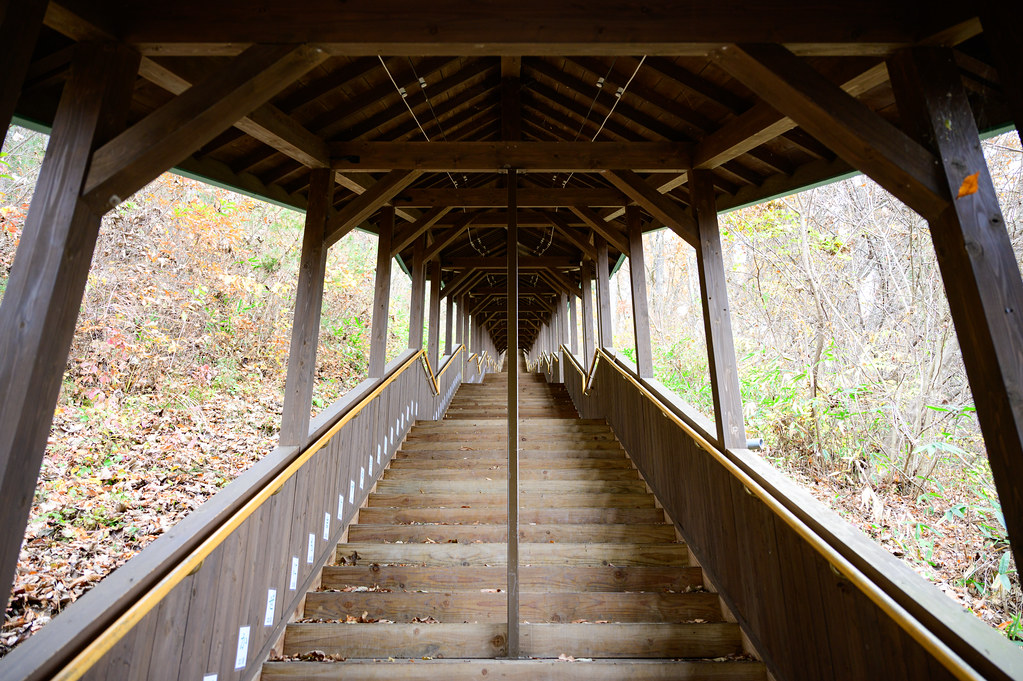
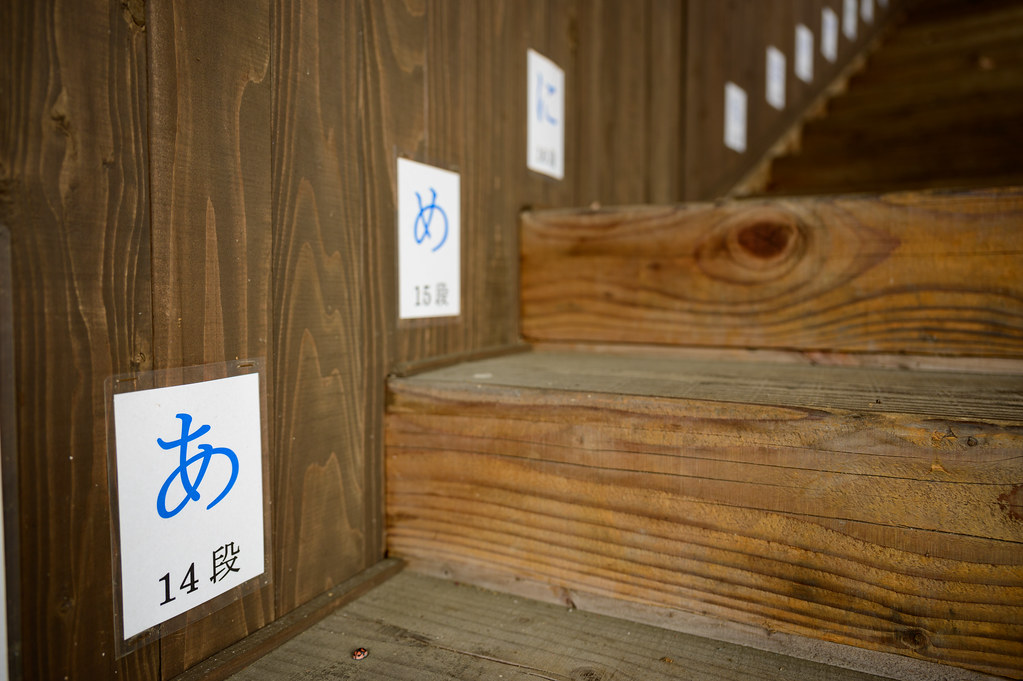
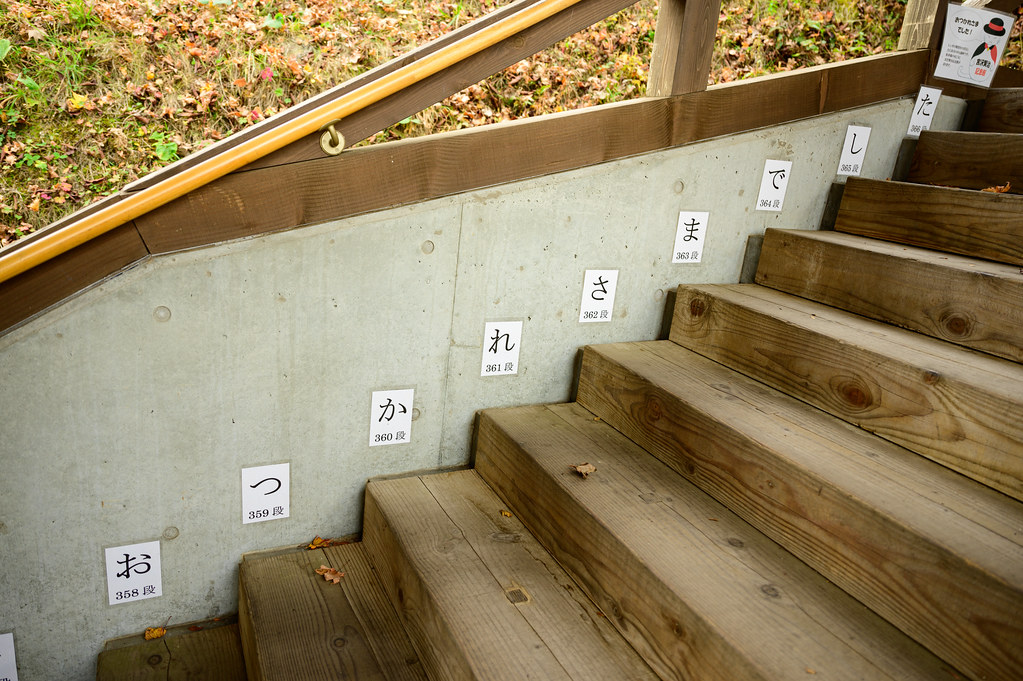
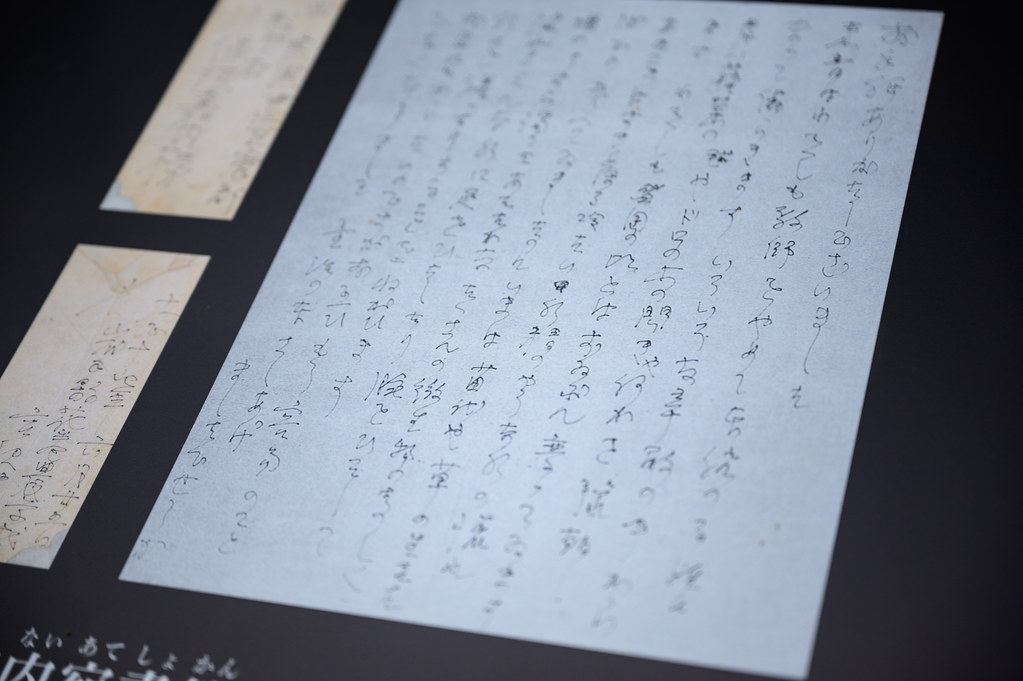
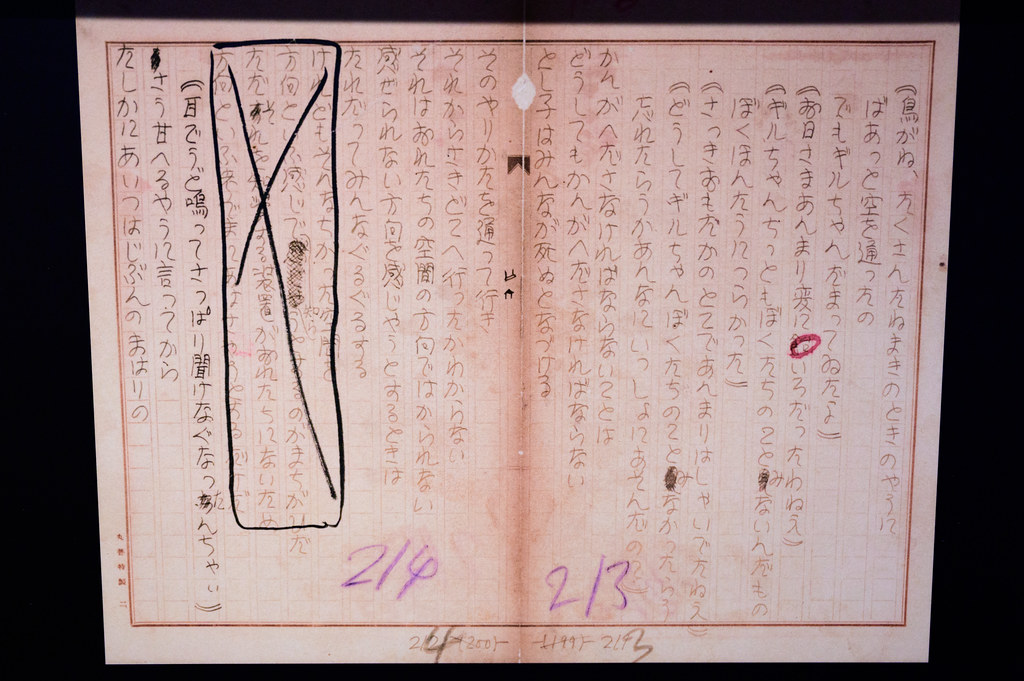
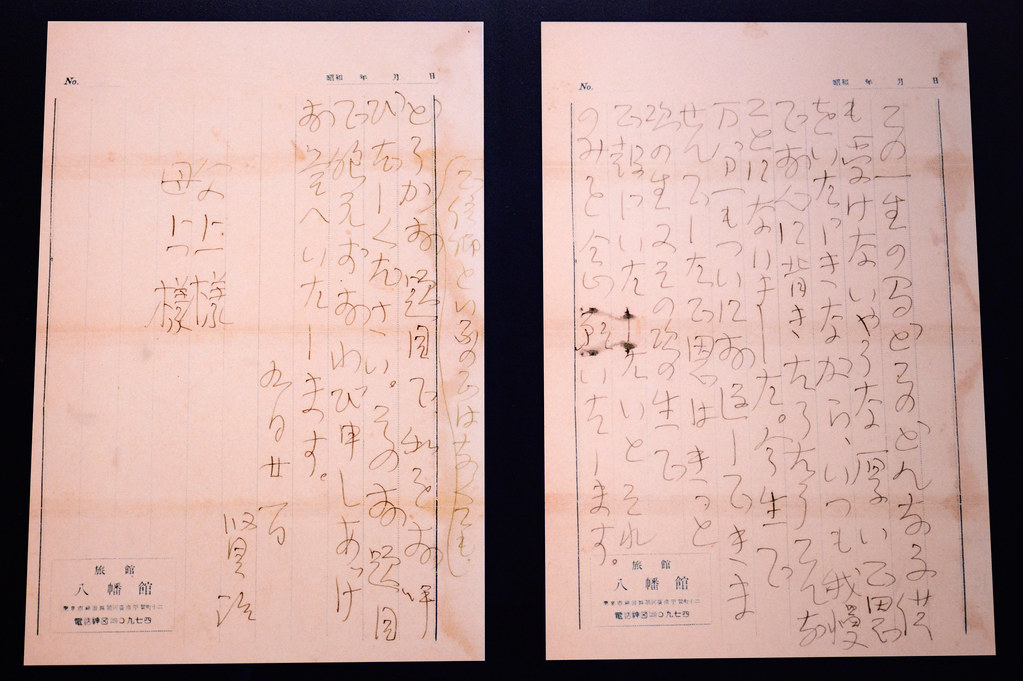
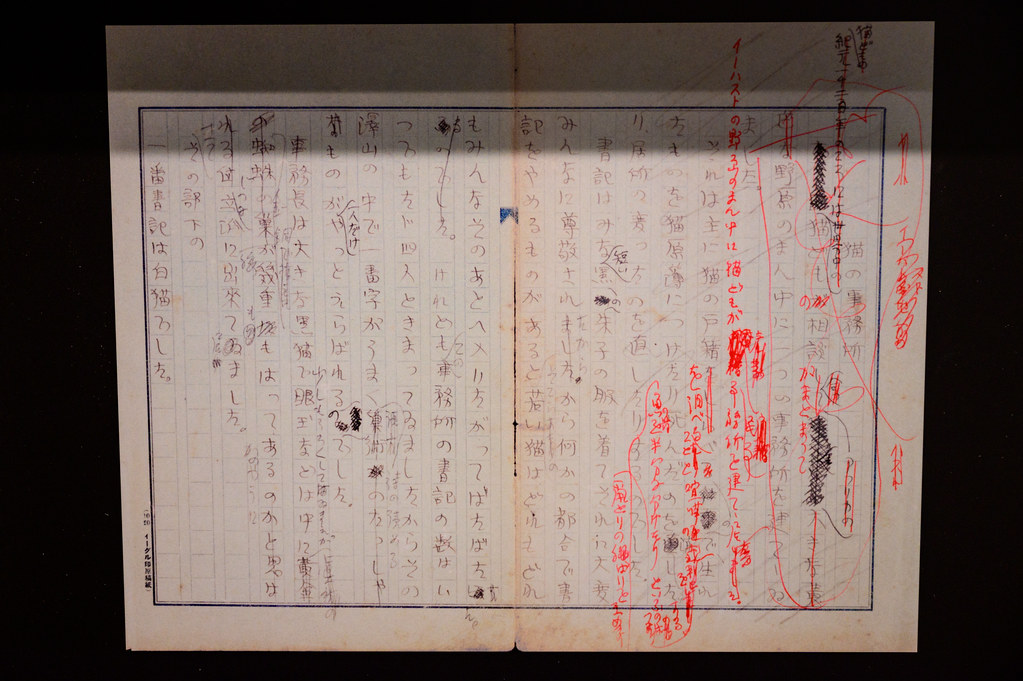
To get to the museum, we needed to climb exactly 366 stairs which were numbered and decorated with Japanese characters that together made up Miyazawa’s poem and other phrases. The main exhibition space inside the museum is neatly designed. At the centre of the hall is a number of screens projecting videos and images related to the 4 main themes of the exhibition. 3 rows of panels displaying reproductions of items related to Miyazawa are placed on the four walls. A small quantity of originals placed behind glass window fill up the space between the centre and the walls. At the first sight the space looks packed with too many items, yet it’s actually easy to navigate between sections and it didn’t feel crowded at all.
There I learned a few facts that I didn’t know about Miyazawa, such as that he once held an academic position in agricultural science, that he was a devout Buddhist who was keen to learn about Christianity, and that at one point hoping to develop a closer connexion to the life of peasants, he retired to an impoverished region of Hanamaki to cultivate a farm using modern techniques improved by scientific methods. His short life is the exact embodiment of the spiritual ideal he portrayed in his famous poem 雨ニモマズ (Ame ni mo makezu), which is the kind of person I strive to be.


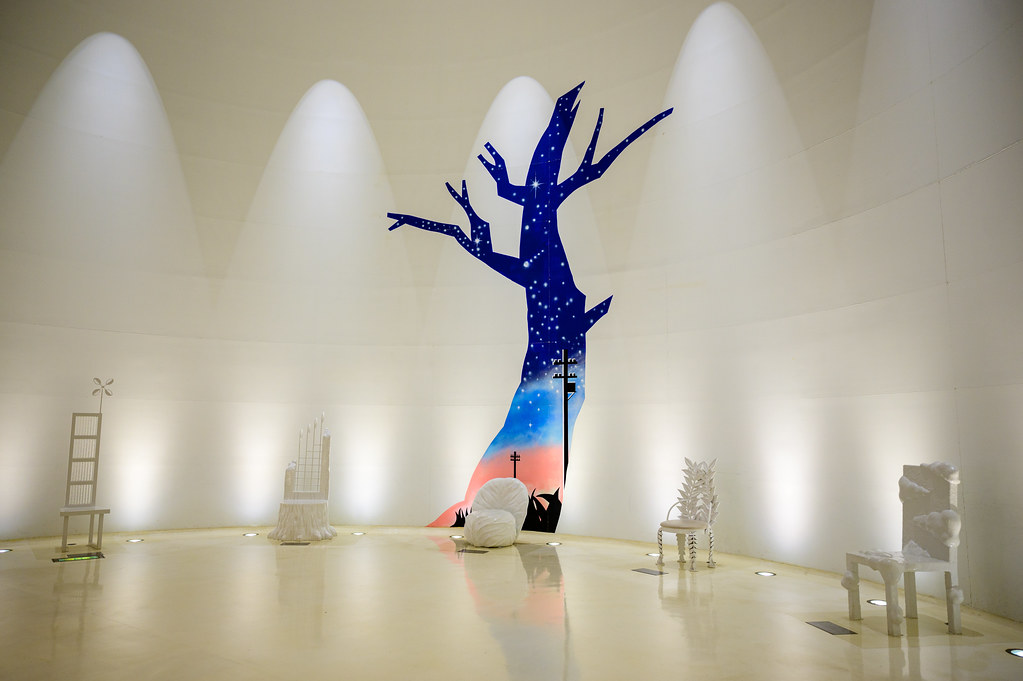
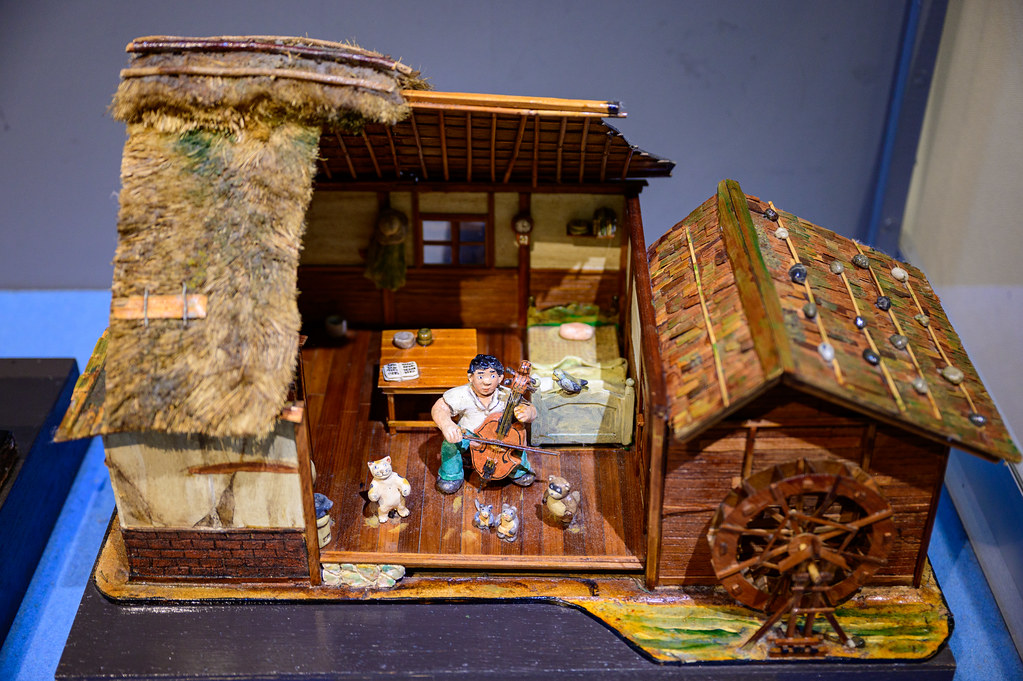
We came to Hanamaki a bit too late in the season, the light show at the Fairy Tale Village inspired by Miyazawa’s works was over. However, permanent installation still remained in place, we were able to see some of the finest crafts we have ever seen in our life. At the entrance stood a wall of panels signed by famous people in the animation industry who have come to this village over the years. The list includes Ghibli’s director Isao Takahata (高畑勲), producer Toshio Suzuki (鈴木敏夫), the composer Joe Hisaishi (久石譲) and many others.
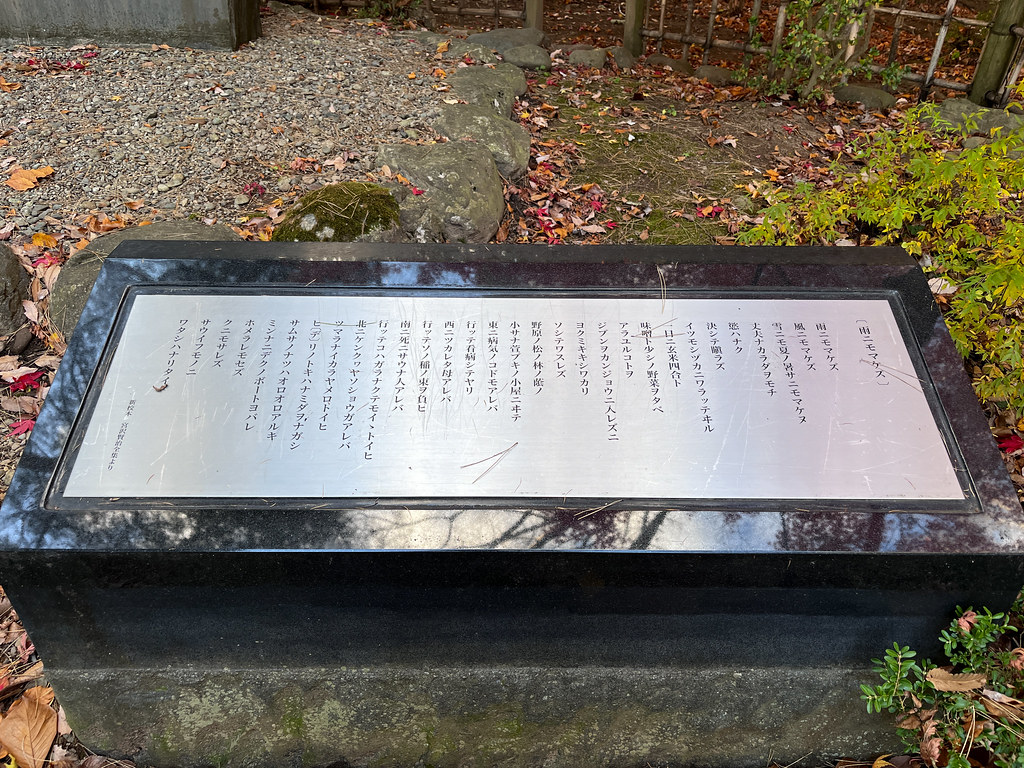
Before leaving Hanamaki, I also went to see the gigantic poetry tablet dedicated to Miyazawa’s 雨ニモマズ (while my friend went to eat ramen). It’s well hidden behind the trees at the end of a walking trail leading to where the poet took farming retreat. The surrounding landscape must have changed tremendously over the years, yet the piece of land that was once cultivated by the poet seemed to have stand still against the erosion of time. There I recalled my favourite contemporary Chinese-language poet 周夢蝶 who too has served as my living ideal leading a minimalist mode of life.
The full take — 130 more photographs from this day























Leave a Reply