- Date
- 2022-12-23, Frisday
- Distance
- 61.12 km biked (3979.23 km in total)

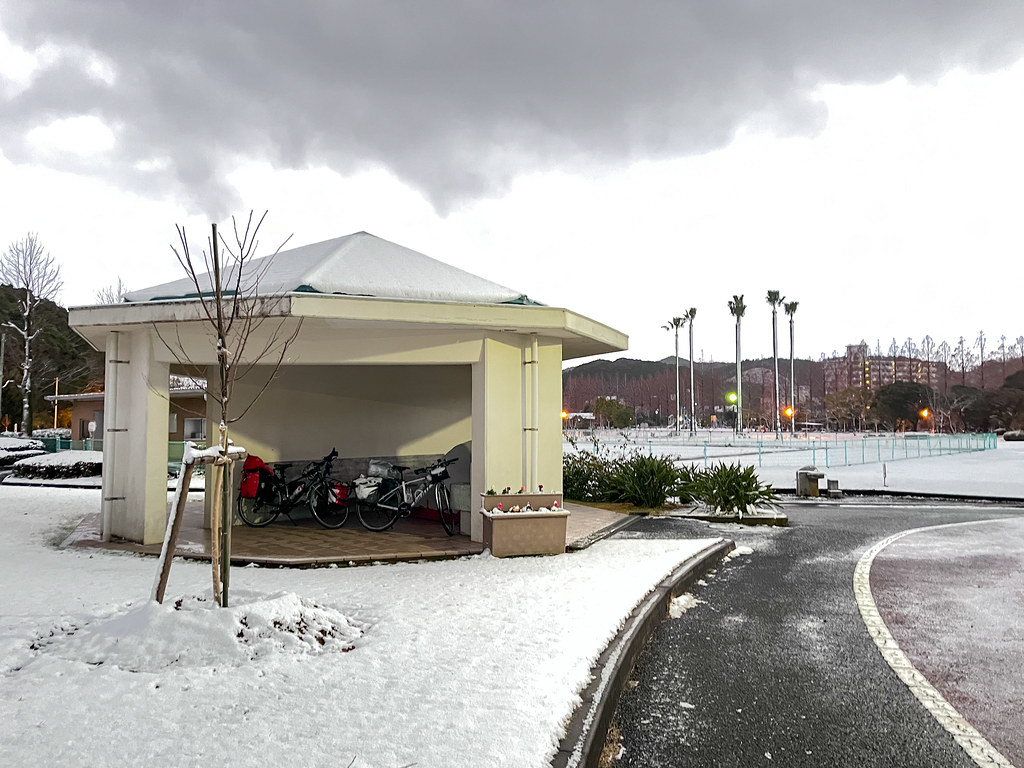


We woke to a world covered in white, our tent pitched beneath the roof of a park gazebo in Isahaya’s city sports park. Snow had been falling since midnight, dusting the trees, grass, rooftops — and even our bicycles — with a delicate layer of whiteness. The hardest part of sleeping in sub-zero temperatures is not the cold that seeps through warm clothes or sleeping bags — those can be layered against. It is the face, inevitably exposed, that suffers. All night long I felt the chill air hovering just above my skin, as though winter itself were keeping watch.
Fortunately, the asphalt still held enough warmth to keep the snow from sticking, so while the landscape around us was painted white, the roads remained ridable. With some relief, we set off toward the Shimabara ferry terminal, eager to 'escape' Nagasaki for Kumamoto across the Ariake Sea. The morning’s ride carried us along small backroads through farmland — the sort of detours Google Maps sometimes chooses, taking us past bamboo groves deep in the hills or cattle barns standing silent in the frost. Plastic-covered greenhouses bulged with crops, while domestic animals — cows mostly — huddled against the cold.
Japanese farmland never ceased to amaze me: The roads could be narrow, just wide enough for two kei cars, yet lined with neatly kept houses pressed close together, as if every metre square of land were too precious to waste. Moreover, everything was astonishingly neat, every corner cared for. Even in the cold of dawn, we passed elderly farmers sweeping leaves from roadside gutters, clearing irrigation ditches, pruning the ridges of their fields, or scattering fertilizer. Even the tiniest 'hobby farms' had no clogged puddles, broken fences, or messy heaps of bricks. Yet abandonment stood out all the more sharply. An uninhabited house in Japan quickly looks painfully derelict, weeds choking the yard, tiles falling away, wooden walls sagging. Here the raw ruin lay bare, exposed to wind and time.
As the morning wore on, the sky began to open. The dull greyness of dawn gave way to a hesitant blue, and sunlight filtered through, setting the white fields aglow. By the time we reached the ferry terminal with just 10 minutes to spare before departure, the day felt lighter, less oppressive, as if the sea itself were breathing a little easier. Heart racing, we rushed to the counter, bought tickets, barely clutched the receipt before dashing to the waiting ferry. The crew waved us forward, guiding our bikes into place. Breathless but triumphant, we rolled on board — lucky, once again, with our timing.


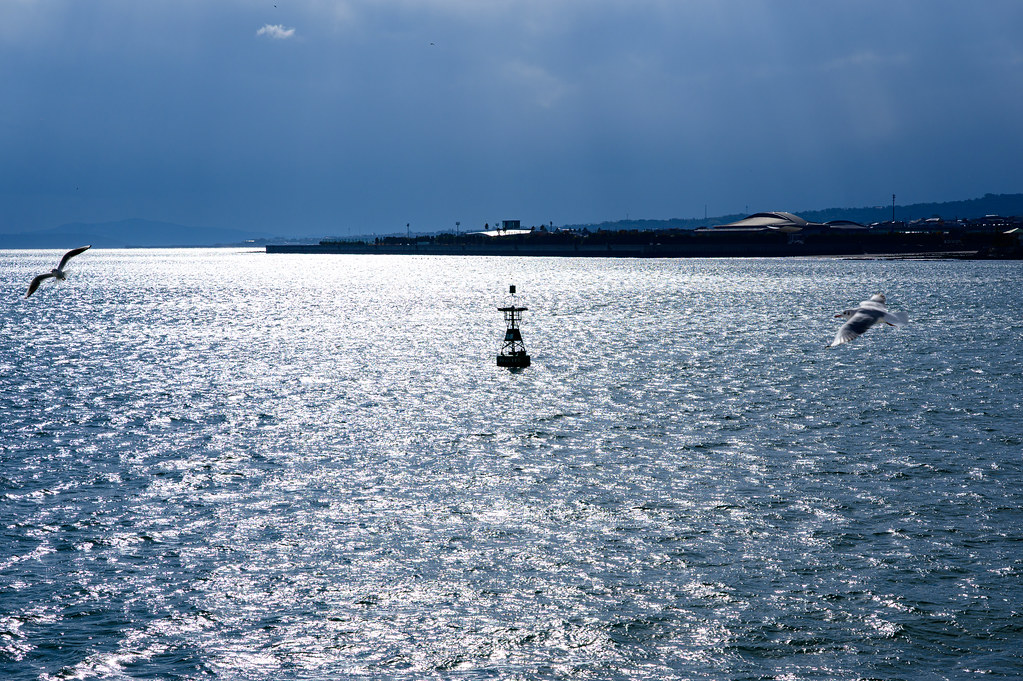


By now we were seasoned ferry travellers with bicycles. We knew the routine: remove what was essential, wheel the bikes into place, and wait as the crew secured them against the wall with practiced efficiency. Then we climbed to the upper deck. A blast of winter air hit us instantly, sharp and bracing, carrying the smell of salt. Seagulls wheeled and shrieked around the ship, white against white, escorting us out of Nagasaki Prefecture and into open water. Behind us the snowy ridges of Kyushu receded, fading into mist. Ahead stretched the calm blue of Kumamoto, promising clearer skies. For once, we let ourselves simply relax. We snapped photos, scribbled diary notes, and breathed deeply of the cold air, as though we could cast off with the ferry every trace of yesterday’s rain, fog, and snow.
Even on the ferry, we were reminded of where we were headed. A giant plush Kumamon — Kumamoto Prefecture’s beloved bear mascot — sat on a passenger seat, inviting selfies from travellers young and old. Children clambered onto its lap; adults lined up for photos as if it were a local celebrity. And indeed, the moment we docked, Kumamon’s face multiplied — smiling from posters, vending machines, manhole covers, souvenir stalls.
But there was little time to linger. We had a mission: to reunite with our Taiwanese friend, nicknamed Superman, and her family, who were visiting Kumamoto Castle this very afternoon. From the ferry terminal we pedalled hard, pushing through the city without pause. Traffic thickened, the pace quickened, and we pressed forward, hoping we weren’t already too late.


At last, around 4pm, we reached the great stone walls and rising keep of Kumamoto Castle. The grounds were already winding down for the day. Shopkeepers along the approach were folding up signs, pulling in displays, and closing their shutters. The air carried the faint smell of food stalls shutting down — skewers snuffed out, sweet steam from chestnut roasters dissipating into the cold. Only a few stragglers remained, hurrying through the gates before closing, their voices muted in the emptying space.
We had just switched on our phone cameras, preparing to surprise them with a playful ambush, when a voice suddenly rang out across the gate plaza — calling my travel companion's name! It was them — Superman and her family — and instead, they had ambushed us. We burst out laughing.
The reunion was pure joy. After two months circling Japan, here we were, unexpectedly face-to-face with friends from Taiwan who are normally too busy even to see often back home. Cameras flashed in every direction as her family happily photographed everything — and everyone — in sight. Under the looming keep, rebuilt after the devastating earthquakes of 2016, we swapped stories, marveled at the coincidence, and delighted in the familiar chaos of family travel. It felt almost like Christmas had come early, hand-delivered by courier and Santa alike, across the snowy seas.
After a round of gift exchanges, and a promise to see each other again soon, we finally waved Superman and her family off to catch their shinkansen. Then we too turned southward, pedalling into the chill evening. Fatigue pressed down, our legs heavy with the day’s effort, but a nearby hotel gave us shelter at last. As we lay down, memories of the frosted morning, the sharp ferry wind, and the laughter of reunion lingered, folding into a single day both arduous and full of warmth.
The full take — 33 more photographs from this day


Leave a Reply