- Date
- 2022-11-06, Sunday
- Distance
- 108.20 km (1562.61 km in total)


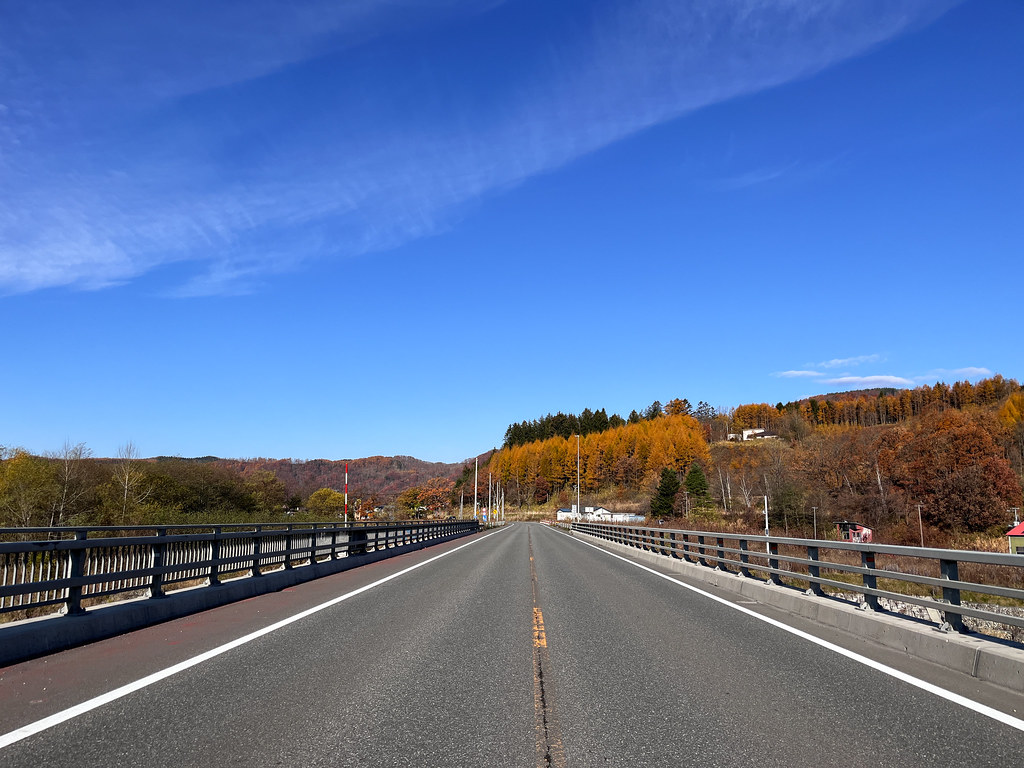


Today we biked 108 km to Tomakomai to stay in a hotel, the longest daily distance we have travelled so far in this journey. It’s not that we want to tortue ourselves, but that there was simply nothing available in between Hidaka and Tomakomai.
Today is also the first time I saw plastic bottles containing yellow-ish liquid (guess what this is!) — which the couple we met the other day (IG: futari.aruki) who started their journey more than 200 days ago call ‘PET bottle bombs' — together with tons of other garbages scattered along this lesser taken country road. Japan gives foreigners the impression of a clean country, but in the back there are still many counter-examples.


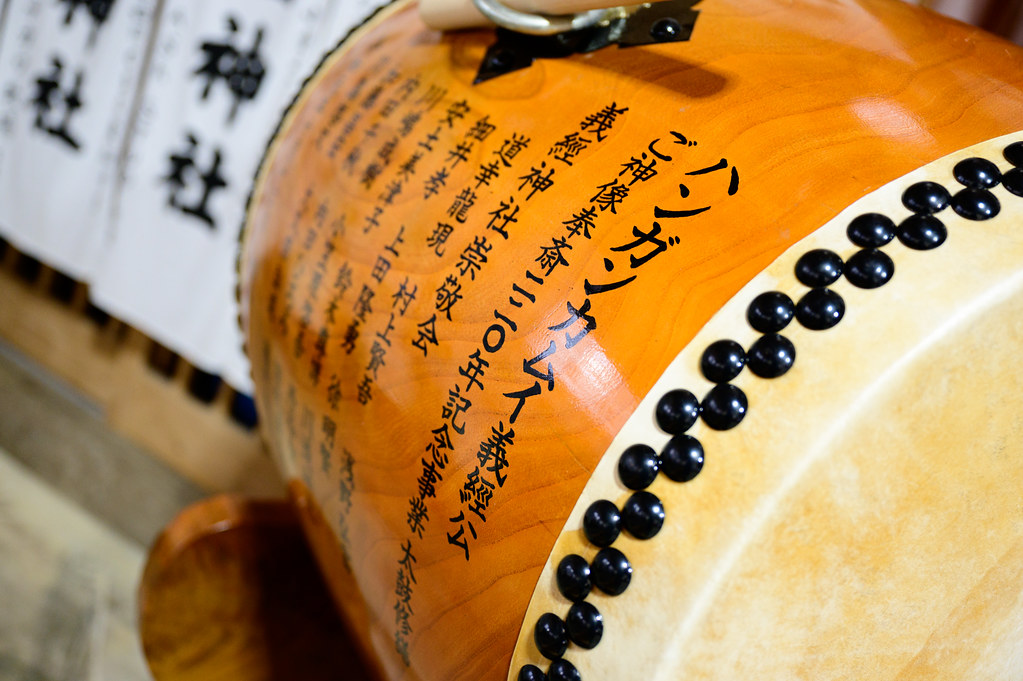
While passing the town of Biratori, we made a pleasant discovery of a shinto shrine dedicated to Minamoto no Yoshitsune (源義経, c. 1159 — 1189), a Japanese warrior of the late Heian and early Kamakura periods who is definitely one of the most popular Japanese historical figures of all time. His life story has been transposed into the realm of literature as a tragic hero and legends have it that instead of dying, he fled to Hokkaido after his final battle. Anyhow, the shrine was quite big considering how small the town was. I even got the chance to speak to a miko (巫女) and to film her writing and stamping the goshuin for me. Every Japanese, she said, has basic training in calligraphy starting in elementary school. In her case, she became proficient in it thanks to frequent practice at work.
Todays' highlight includes an encounter with an ojisan on the side of the road, named 岸野勝男 (Katsuo Kishino). His farm raises white horses, so we have decided to call him ‘White-Hourse ojisan’. Wont to bring home travellers touring around Hokkaido, he invited us to stay at his place which was located near an onsen. Sadly we couldn't accept this offer, however tempting it sounds to us, because his house was situated in a different direction and we were eager to catch up with our schedule. Before parting, he gave us 1000 yen to buy juice. This energetic ojisan is full of enthusiasm; I like speaking to him.
We do not have much to say about Tomakomai, because we couldn't see very much after sunset. We entered its border from a newly developed industrial district. The roads were wide, the light dim, and the traffic spare. Dark silhouettes of heavy machinery and gigantic containers stood in the foreground of the pristine seaside.


My friend went to buy a new pair of eyeglasses to replace her broken one at the Tomakomai branch belonging to the same company I ordered mine in Abashiri. This time, however, the employee who received us was not all that enthusiastic about serving foreigners who spoke little Japanese, despite speaking impeccable keigo (honorific form in Japanese language). Often impatient when we were taking the time to find words using apps or gestures, she gave me the impression that she wanted to get rid of us as soon as possible. Her behaviour seemed to be saying 'Why am I the unlucky one to receive foreigners?' The Abashiri employee on the contrary, would listen carefully while keeping eye contact, making effort at rephrasing his sentences several times until we finally got what he meant. This is a perfect example of how to show disrespect while speaking politely, when keigo is reduced to mere social formula.
Tomorrow we will arrive in Muroran, another industrial city.
The full take — 23 more photographs from this day




Leave a Reply